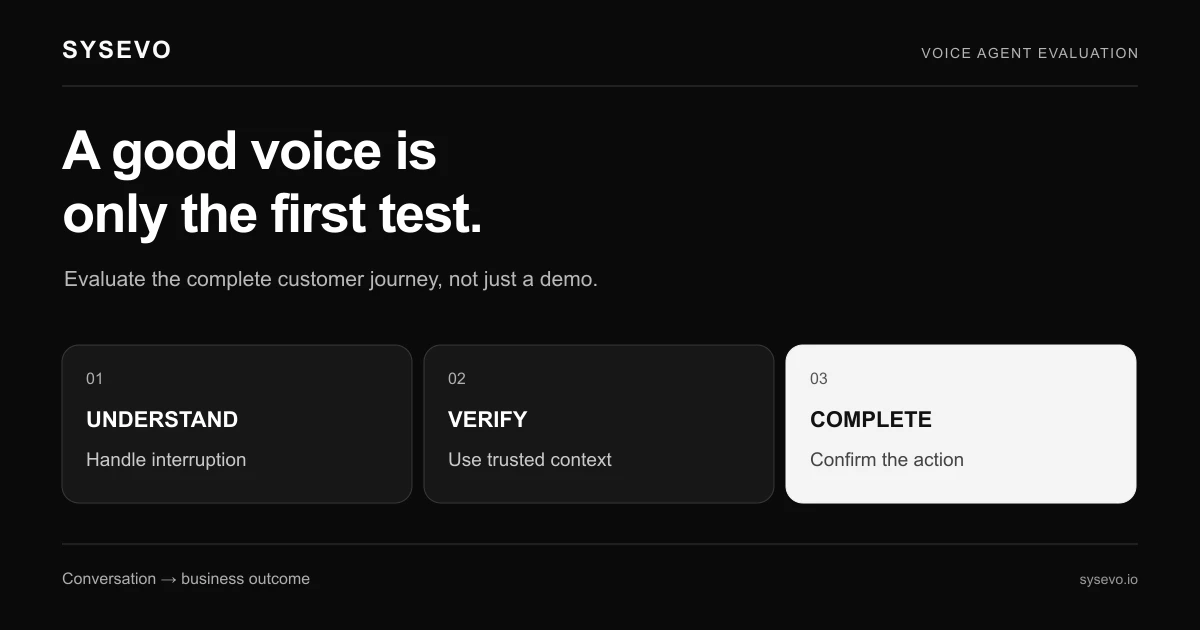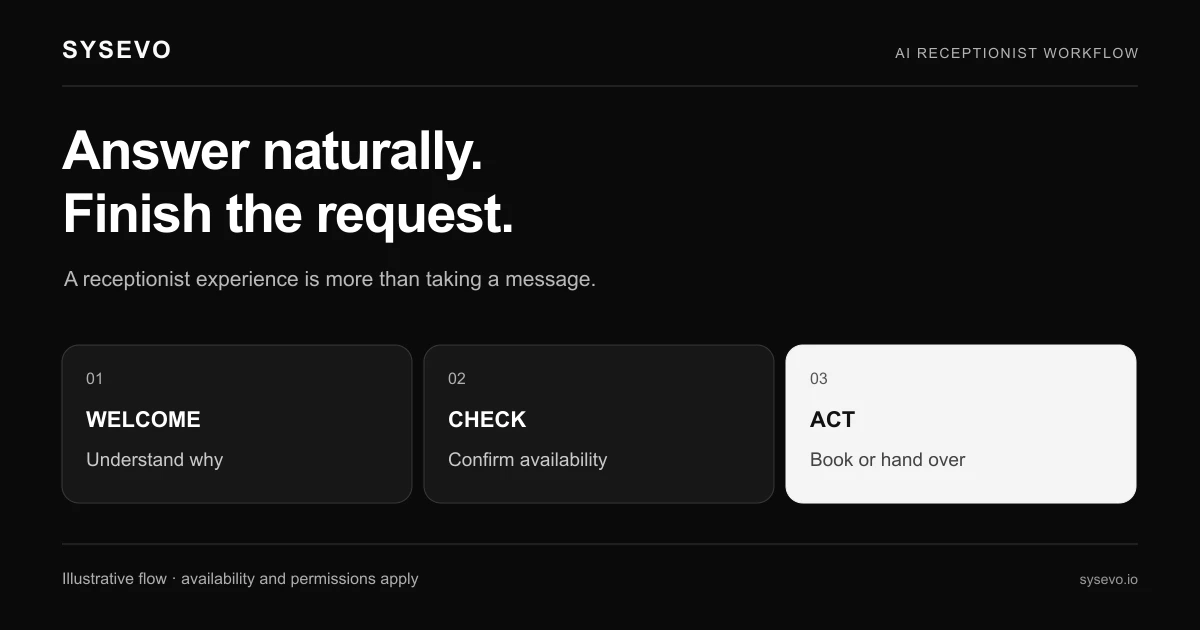

Callback automation AI is a straightforward mechanism: a voice agent answers your incoming call, establishes what the caller needs, writes that intent to a built-in CRM, and offers a callback at a time that suits them instead of making them wait. No hold queue. No queue abandonment. No callback menu with dead-end options. This article explains how the system actually works, what it costs, which businesses benefit most, and where it falls apart.
Callback automation differs fundamentally from traditional hold queue logic. A traditional queue holds the caller on the line, playing music or messages, while staff work through a list. Every minute adds abandonment risk. Industry benchmarks show that 25-30% of queued callers hang up within two minutes, costing businesses an estimated $62 billion annually in lost transactions and frustrated customers. Callback automation flips the dynamic: the system captures the caller's intent without wasting their time, books a time they confirm, and lets them hang up feeling heard.
How Callback Automation AI Actually Captures Intent
When a call arrives, the voice agent answers within two rings (versus a hold queue's random wait). The agent uses speech recognition to listen to the caller's opening words, then asks clarifying questions: "Are you calling about an appointment, a billing issue, or something else?" The system captures these responses and converts speech to text in real time, writing summaries directly to your CRM without human transcription. This happens in under 60 seconds for most calls.
The mechanism depends on three layers. First, the voice model must understand natural speech without requiring callers to press buttons or say keywords. Most systems use large language models trained on multi-domain conversations, not medical or legal jargon specifically. Second, the system must extract structured data from unstructured speech: turning "My bill is wrong again, like last month" into a field that says "Billing Dispute: Recurring Issue". Third, it must handle silence, interruptions, and unclear intent without escalating every uncertain call to an agent. If the system cannot be confident about intent after two clarifications, it routes the call to a human instead of guessing wrong.
Callback Automation AI and the Hold Queue Alternative
A typical customer service operation manages 200-400 inbound calls daily across 3-5 agents. On a normal Tuesday, 40-60 callers queue. Without callback automation, your team queues these callers, answers them in order, and books follow-ups manually into a spreadsheet or CRM. A single agent handles 6-8 calls per hour, meaning queued callers wait 15-45 minutes during peaks. Callback automation routes intent-captured data straight to the CRM, and agents return calls to pre-qualified callers on their own schedule, often doubling throughput without adding headcount.
The comparison breaks down this way. Traditional queues create a backlog that requires you to hire more agents or extend hours. Callback automation defers the interaction without dropping it, so callers accept a 24-48 hour callback window if they know someone will call them back at a set time. Operators typically report 15-20% improvement in first-contact resolution because the callback agent has the caller's intent, history, and context before the call begins. No redirection. No "let me transfer you."
What Callback Automation Cannot Do
Callback automation fails in three scenarios. First, it cannot replace same-day urgency. A patient calling an emergency dental clinic, a customer with a payment failure blocking their account, or a delivery driver needing immediate directions cannot wait until tomorrow. These calls must be answered by a human immediately. Most systems allow you to flag certain keywords or caller types ("I need immediate help", "my account is locked") and bypass callback automation entirely, routing directly to an agent.
Second, callback automation struggles with emotional de-escalation. An angry customer may reject a callback offer and demand to speak to someone now. A voice agent will offer the callback repeatedly, which can feel robotic and frustrating. Systems that escalate too readily to humans waste the efficiency gains. Systems that refuse to escalate create negative brand perception. The balance requires tuning: most businesses set a threshold where three refusals of a callback trigger immediate agent routing.
Third, callback windows are not guaranteed. If you promise a callback between 2 and 3 PM and your team is handling an emergency or outage, the caller gets a missed callback and a poor experience anyway. The system must have enough agent capacity to keep callback commitments 95%+ of the time. A 300-call-per-day business with 2 agents cannot absorb 80 callbacks in a single afternoon. Callback automation works best when you have capacity predictability and realistic callback windows.
Implementation and Real-World Outcomes
A pest control company with 250 calls per day across 4 scheduling agents implemented callback automation for appointment requests in March 2024. The system captured appointment intent and time preferences during off-hours and before 9 AM when the team was in the field. Agents returned calls to pre-qualified prospects between 3 and 5 PM. Within 60 days, appointment booking time dropped from an average of 40 minutes (including wait) to 12 minutes, and missed appointments fell by 18% because callers had confirmed a specific time the day before. The company avoided hiring a fifth agent that year.
Implementation typically takes 2-4 weeks and costs $2,000-$5,000 in setup, plus $500-$2,000 monthly depending on call volume and feature complexity. A system with voice AI, intent capture, and CRM integration sits at the higher end. Costs scale with the number of concurrent agents and callback queue size. Payback typically occurs within 6-9 months if you measure against the cost of hiring one additional support agent (salary plus benefits averaging $35,000-$50,000 annually). Many businesses see immediate improvements in customer satisfaction scores because wait times drop to near zero.
Choosing the Right Callback Automation System
Evaluate callback automation on three criteria. First, does the system offer a native CRM integration or do you have to export data and re-import? Native integration means caller intent data arrives in your CRM instantly, ready for agents. Re-exporting data introduces lag and manual error. Second, does the voice agent sound natural, or do callers hang up because they sense they are talking to a machine? Test the system with a sample call; if more than 10% of testers identify the caller as non-human in the first 15 seconds, the system will damage trust. Third, how does the system handle escalations to humans? Some systems hand off calls perfectly. Others require agents to re-introduce themselves, making the transfer feel clunky.
Most platforms price by monthly active calls or concurrent agent capacity, not by per-call fees. A business with 300 inbound calls daily and 4 agents should expect $1,200-$2,200 monthly for a full-featured system. Smaller operations with fewer than 100 daily calls may find flat-rate plans at $400-$800 monthly. Request a free trial with your actual call volume and use case before committing; systems optimized for restaurants behave differently from those built for dental offices.
Frequently Asked Questions
Will callback automation sound like a bot to my customers?
Modern voice AI uses neural text-to-speech and natural language models that can sound human. A 2023 industry survey found 70% of users could not distinguish high-end voice AI from a human agent during a 30-second call. Older systems sound noticeably synthetic. Test with a live call, not a demo.
How do I handle customers who refuse a callback?
Most systems allow you to set escalation triggers. If a caller refuses a callback after one or two offers, the system routes them to a live agent immediately. You control the number of refusals before escalation to balance efficiency and customer experience.
Does callback automation work for inbound support calls, or only sales?
It works for both. Support teams use it to capture issue categories and urgency before assigning to the right specialist. Sales teams use it to qualify interest and schedule demos. The mechanism is the same; the CRM fields differ.
What happens if a customer calls back during their callback window?
The system logs the incoming call and either connects them to an agent if available or adds them to the queue with priority because they are a confirmed callback. Most systems flag these as "high priority return caller" in the CRM.
Can callback automation integrate with my existing CRM?
Most major CRMs (Salesforce, HubSpot, Pipedrive) support third-party integrations via API. Smaller or custom CRMs may require custom development. Ask vendors for a list of pre-built integrations before assuming yours is supported.
How much does callback automation save compared to hiring another agent?
A full-time support agent costs $35,000-$50,000 annually in salary plus 25-30% for benefits and training. A callback automation system costs $6,000-$24,000 yearly and typically increases existing agent capacity by 30-40%, avoiding the need for one new hire. Payback is usually 6-9 months.
Does this technology work for industries with high urgency, like emergency services?
Not as a primary system. Emergency calls need immediate human response. Callback automation works as a secondary tier for non-emergency inquiries, follow-ups, or scheduled appointments that do not need real-time response.
Callback automation AI eliminates hold queues by removing the wait entirely and replacing it with scheduled, intent-rich callbacks that prepare agents for faster resolution. It is not suitable for same-day urgency, highly emotional escalations, or operations without backup capacity. For businesses with 100+ daily calls and predictable callback windows, it typically pays for itself within a year while improving customer satisfaction. If you operate a support team managing routine inquiries, appointments, or qualification, it is worth a trial. Book a call to discuss how callback automation fits your operation.