
In September 2026, as Global Times reported, China-founded AI agent Manus formally resumes independent operations after a split from Meta. The separation marks a significant shift in how voice AI development is being pursued globally, with implications for enterprises evaluating conversational AI platforms and the broader competitive landscape of agentic AI. Understanding what prompted the split and what it signals about the voice AI market helps buyers make clearer technology decisions.
Manus had been operating under Meta's portfolio, but the formal resumption of independent operations suggests a strategic divergence in how the two organisations want to develop and commercialise voice AI technology. This kind of separation is not unusual in enterprise software, but it matters because it affects roadmap priorities, pricing models, and integration partnerships that would eventually affect customers considering voice AI solutions for their own businesses.
Why Independence Matters in Voice AI Development
When an AI agent platform operates under a larger corporate umbrella, its priorities are shaped by the parent company's broader strategy. Meta's interests span social platforms, advertising, and metaverse infrastructure. Manus operating independently means its product roadmap can now be driven directly by voice AI market demands rather than corporate priorities that may not align with enterprise communication needs. This typically translates to faster iteration on features that matter to business users, such as CRM integration, call logging, and multi-language support in specific regional markets.
Independent operation also means Manus can pursue partnerships more flexibly. A voice AI platform integrated with a built-in CRM system captures caller intent and writes it directly to a customer record, eliminating manual data entry and reducing the lag between contact and follow-up. When a platform is part of a larger corporation, those integration decisions are often constrained by corporate ownership stakes and ecosystem preferences. As an independent entity, Manus can negotiate and integrate with more CRM platforms, payment processors, and industry-specific software without internal approval delays.
What This Split Signals About the Voice AI Market
The China-founded AI agent Manus formally resumes independent operations at a moment when voice AI is shifting from experimental to operational. Industry benchmarks put adoption of voice AI in customer service at roughly 35 to 40 percent of mid-market companies by 2026, up from around 12 percent three years earlier. This growth has attracted multiple developers, and the competitive intensity is driving specialisation. Manus's independence suggests confidence in its ability to compete on its own terms rather than relying on Meta's brand or distribution advantage.
The timing also reflects a broader trend toward modular, best-of-breed solutions. Rather than relying on a single large tech company for voice, CRM, analytics, and integration, enterprises now prefer platforms that do one thing very well and connect cleanly to their existing tools. A voice AI agent that answers calls on the second ring, captures caller intent, and writes it to your existing CRM performs a specific job. If it does that job reliably and cheaply enough, it wins customers. Manus being independent allows it to compete on execution and price rather than corporate leverage, which often appeals to cost-conscious operations teams.
Implications for Enterprises Considering Voice AI
For business owners and operations leads evaluating voice AI, the Manus split highlights a practical consideration: platform stability and roadmap transparency matter more than corporate size. A large parent company can provide capital and marketing reach, but it also means product changes are subject to corporate strategy shifts. An independent platform lives or dies on customer satisfaction and product-market fit, which often creates stronger incentives to listen to user feedback and ship features customers actually request.
When you deploy a voice AI agent to handle incoming calls, you are committing to integration work. Your phone system needs to connect to the voice platform. The voice platform needs to write to your CRM. Your support team needs training on how the agent works and when to escalate. If that platform changes ownership or strategic direction mid-deployment, your investment becomes uncertain. Independence does not guarantee survival, but it does mean the product roadmap is more likely to remain focused on the specific problem it solves, rather than being subordinated to corporate priorities that shift annually.
Another consideration is pricing flexibility. When platforms operate within larger corporations, pricing often reflects corporate financial targets rather than competitive market dynamics. Independent platforms often have more freedom to compete on price, offer volume discounts, or introduce new pricing models without board approval. This matters particularly for businesses running outbound campaigns that use voice agents to qualify leads or confirm appointments. High per-minute costs make large-scale outbound operations uneconomical. An independent platform can compete on unit economics more directly.
Where Voice AI Still Struggles and When It Is the Wrong Choice
The growth of voice AI platforms like Manus reflects genuine capability improvements, but the technology still has hard limits that affect where it makes sense to deploy. Voice AI works best for well-defined tasks with constrained vocabularies and predictable caller intents. A dentist's office using voice AI to confirm appointments the day before, or a restaurant taking reservations, sees reliable performance because caller intent is narrow. A health insurance provider using voice AI to handle complex policy questions or dispute resolution sees higher escalation rates because intent variation is high and legal liability is real.
Language nuance remains a friction point. A caller who says "I called three weeks ago and spoke to someone named Mike" expects the agent to search historical call logs and retrieve context. If your voice AI has caller memory enabled, it can do this. If not, the agent hears a reference to a past interaction and cannot act on it, forcing escalation. This cost of escalation compounds quickly in high-volume operations. A platform that routes 40 percent of calls to human agents because context retrieval fails is more expensive than hiring the humans outright.
Accent and dialect robustness is another reality check. Publicly available testing shows that most voice AI systems perform well on standard English accents from high-GDP regions and substantially worse on regional accents, non-native speakers, and languages outside their training data. If your customer base is geographically or linguistically diverse, deploy voice AI cautiously. Start with a pilot on a specific call type, measure escalation rates honestly, and do not project pilot results to your full volume until you have real data from your actual customer base.
The Broader Conversation About AI Agent Independence
Manus's independence is part of a wider pattern. As Nasscom noted in recent analysis, voice AI agents are moving beyond simple question-answering to task execution: they do not just answer "What are my account options?" but execute a refund, book a follow-up, or log a ticket. This shift creates economic incentive for platform independence because task-execution agents are more valuable when they are tightly integrated with a company's core systems. A Meta-owned voice platform makes sense for Facebook-adjacent products. A voice AI agent that executes transactions in your ERP system makes sense as a standalone product competing on integration depth and reliability.
For companies evaluating voice AI platforms, this dynamic suggests asking direct questions about roadmap independence during due diligence. Is the platform's primary focus voice-based task execution, or is voice a secondary feature of a larger platform? Does the product roadmap get published and updated regularly? Can customers request features and see them prioritised? These questions are harder to answer when a product is subordinated to corporate strategy, and easier to answer when a product lives or dies on customer satisfaction.
Evaluating Voice AI Solutions in This Landscape
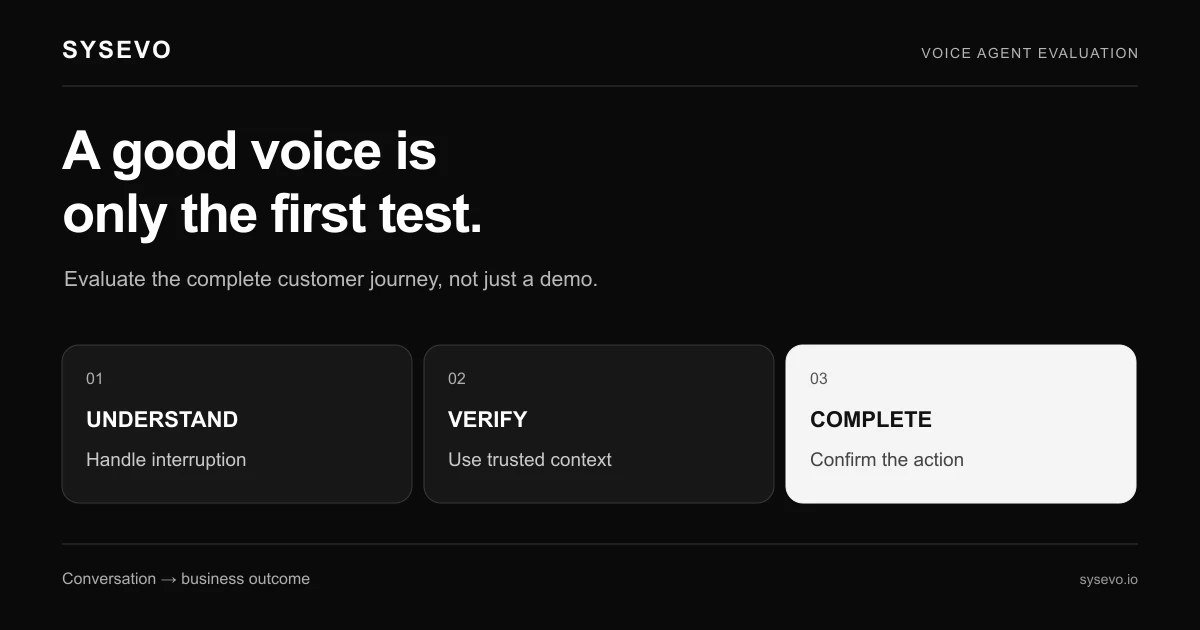
The conversation around Manus's independence is ultimately a conversation about choosing the right tool for your operation. Voice AI solves a real problem: a missed call costs money, and a call that arrives and gets routed correctly within 30 seconds preserves customer satisfaction. A voice agent that answers on the second ring, captures intent, and writes it to your CRM eliminates that friction. The question is not whether voice AI works, but whether it works for your specific use case and at what cost.
When you are evaluating platforms, look for transparent pricing, demonstrated integration with your existing systems, and honest communication about when escalation happens. A platform that claims 95 percent first-contact resolution on all call types is overstating its capability. A platform that publishes escalation rates by call type, shows you real performance data from similar businesses, and helps you plan for the 15 to 25 percent of calls that need human attention is being honest. Platforms operating independently often have stronger incentives to be honest about limits because their reputation is not bolstered by corporate brand.
If you are considering voice AI for your operation, book a call with our team to discuss how a voice agent integrates with your existing CRM and what realistic performance looks like for your specific use case. Understanding both capability and cost upfront prevents expensive surprises later.
Frequently Asked Questions
Does Manus's independence affect customers already using its platform?
Existing customers should not expect immediate changes. However, independence means future feature development, pricing, and integrations will be driven by Manus's own priorities rather than Meta's broader strategy. This typically results in faster iteration on features enterprise customers request, but also means roadmap predictability depends on Manus's own business stability rather than Meta's resources.
How does voice AI compare to hiring human receptionists?
Voice AI handles high-volume, routine calls at per-contact costs between 50 to 80 percent lower than human staff. A voice agent answers within seconds, never takes breaks, and writes every caller's information directly to your CRM. Human receptionists provide better handling of complex or angry callers and build relationships. The best approach for most operations is hybrid: voice agents handle routine calls, human staff handle escalations and complex requests.
What should I look for when choosing a voice AI platform?
Prioritise transparent pricing, integration depth with your existing CRM or ERP, published escalation rates, and the ability to monitor agent performance in real time. Ask for references from businesses similar to yours. Test the platform on your actual call types before full deployment. Avoid platforms that guarantee unrealistic first-contact resolution rates.
How do voice AI agents handle calls in languages other than English?
Most platforms support multiple languages, but performance varies. Test your specific language and dialect before committing to large-scale deployment. Many platforms perform well on standard accents and regional variations from high-GDP regions and less well on others. Check published performance data for your language pair before signing a contract.
Can voice AI integrate with my existing phone system and CRM?
Most modern voice AI platforms integrate with major phone systems via APIs and support standard CRM systems like Salesforce, HubSpot, and Pipedrive. Confirm integration availability and complexity during due diligence. Some platforms offer built-in CRM functionality, which simplifies deployment if you are not locked into a specific CRM system already.