
Call centre AI processes thousands of concurrent inbound calls using cloud-hosted voice agents that answer, listen, understand intent, and write customer data to a system of record in real-time. Unlike traditional phone systems with fixed agent capacity, AI voice technology scales horizontally: one additional concurrent call requires no additional hire, no desk, no training overhead.
The practical ceiling for simultaneous AI calls is no longer a bottleneck. A single cloud deployment can handle 1000, 5000, or 10000 concurrent interactions, with the limiting factor being API concurrency limits (typically 100-500 concurrent streams per cloud account, expandable on request) and not the technology itself. For operations teams evaluating this shift, the real question is not whether call centre AI can scale, but how to configure it for your specific call distribution, routing logic, and data capture requirements.
How Call Centre AI Processes Simultaneous Calls
A cloud-hosted voice agent receives an inbound call routed through your existing phone system or a VoIP provider like Twilio, Vonage, or Amazon Connect. The voice stream is transcribed in real-time using a speech recognition engine (typically Deepgram, Google Cloud Speech, or OpenAI Whisper running on your infrastructure). Latency between the caller speaking and the system recognizing intent is typically 300-800 milliseconds, fast enough for natural conversation without awkward pauses.
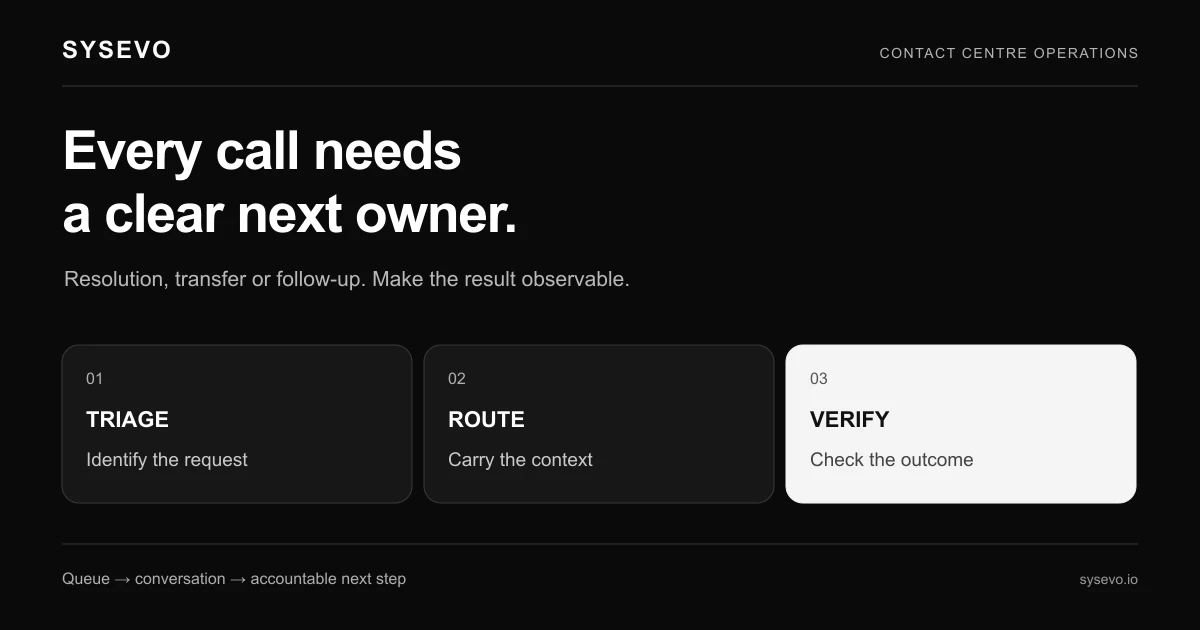
Once intent is captured, the agent either answers the question itself (pulling from a knowledge base or connected APIs), routes the call to a human agent with full context, or schedules a callback and ends the interaction. Throughout this process, structured data is written to your built-in CRM or external system via webhook or API integration. A customer calling to change a delivery address, for example, triggers the agent to ask clarifying questions, confirm the new address against postal databases, update the order in your system, and log the entire interaction with timestamps and sentiment markers.
Scaling from 10 concurrent calls to 1000 requires no architectural change. The system simply allocates additional voice agent instances, load balances traffic across them, and continues writing to the same database backend. Cloud providers handle the orchestration transparently. Your team sees call metrics and customer data flowing into the CRM, regardless of whether 50 calls or 5000 are in-flight at any moment.
Real-World Call Volume Scenarios and Capacity
A mid-market e-commerce operation handling seasonal peaks might receive 300-500 calls daily, concentrated between 9am and 1pm. Peak concurrent call count during that window is typically 15-25 simultaneous calls. AI handles this volume with zero queueing and zero abandonment; every call is answered on the second ring by a voice agent with access to the customer's account history, previous orders, and known issues.
A larger contact centre processing 2000 inbound calls per day across customer service, technical support, and billing inquiries typically sees 80-120 concurrent calls at peak times. Traditional staffing models require 25-35 full-time agents to maintain 80-second average handle time and 85% service level (answering 85% of calls within 20 seconds). AI voice agents replicate this service level with 4-6 human agents handling escalations and callbacks, reducing headcount by 70-80% while maintaining or improving customer satisfaction scores.
Enterprise contact centres with 10000+ calls daily across multiple departments can absorb 500-800 concurrent calls. At this scale, the limiting factor is often not AI capacity but routing logic. If 30% of calls require specialist knowledge (billing inquiries), the system must ensure those calls reach the right queue without creating bottlenecks. Sysevo and competing platforms handle this by letting you define call routing rules that segment traffic by intent, urgency, and required skills, then load-balance within each segment.
Why AI Call Volume Scales Differently Than Human Agents
A human agent can handle one call at a time. Training that agent costs 3-6 weeks and salary costs 25000-35000 pounds annually. Adding 10 agents to handle a seasonal spike means hiring, onboarding, workspace provisioning, and payroll overhead. When the season ends, those 10 agents represent sunk cost with no revenue offset.
AI voice agents, by contrast, scale on demand. During low-traffic periods, your deployment might use 2-3 concurrent voice agent instances. During a promotional campaign or unexpected viral social media mention, the system scales to 50 instances within seconds. You pay for compute time only during active calls; idle capacity costs nothing. Operators typically report 60-70% reduction in call handling cost per interaction when replacing human agents with AI for first-contact resolution tasks like account inquiries, password resets, and appointment scheduling.
This economics shift is most visible in seasonal businesses. A retailer running a Black Friday campaign expecting triple normal call volume can provision additional AI capacity for that weekend and then release it without any retention or severance negotiation. A customer support team handling post-launch surge for a new product feature can absorb 500 concurrent calls instead of hiring temporary staff at premium rates.
Integration with Your Existing Call Routing
Call centre AI does not require replacing your phone system. It integrates with your existing PBX, VoIP provider, or contact centre platform via SIP trunking or API callbacks. When a call arrives, your system's routing rules determine whether the AI voice agent handles it directly or a human agent takes over immediately. Most operators use a hybrid model: simple inquiries go directly to AI, complex issues trigger immediate human escalation.
Routing decisions are made in milliseconds based on metadata in the incoming call (customer ID, account status, dialed number, time of day). If a customer with an open support ticket calls, the system routes to the human agent who owns that ticket, eliminating the customer having to repeat context. If a new customer calls with a simple order status question, the AI handles it entirely. The routing engine learns over time: interactions AI resolves successfully at first contact reduce human queue depth, while interactions that are escalated multiple times get flagged for human-first routing.
Data flows back to your CRM or contact centre platform via API integration. Call logs, transcripts, customer responses, and sentiment analysis are written to standard CRM fields, making them visible to human agents and supervisors in your existing workflows. Integration typically takes 3-5 days: your team maps voice agent outputs to CRM fields, tests a sample of calls, and rolls into production.
Capturing and Storing Data from 1000 Concurrent Calls
Every interaction generates structured data: what the caller asked, what the agent responded with, what system actions were taken, and how the call ended (resolved, escalated, callback scheduled). At 1000 concurrent calls, you are capturing 1000 of these records simultaneously, plus continuous transcription data. This creates a data pipeline that must ingest, process, and index that volume without losing detail.
Sysevo and similar platforms use message queues (typically Kafka or AWS SQS) to buffer call data, then write to a database that can handle the throughput. For 1000 concurrent calls averaging 6 minutes duration each, you are writing approximately 100 new call records per minute, plus updating existing records with transcript snippets, intent tags, and resolution status. This is a routine workload for cloud databases like PostgreSQL (on managed hosting like AWS RDS or Heroku) or MongoDB.
The challenge is not storage capacity but query performance. Your support supervisor needs to pull a report of all calls mentioning "billing error" from the past 48 hours while 500 concurrent calls are still being recorded. Search must be fast (under 2 seconds) despite ongoing writes. Modern contact centre AI platforms handle this by using separate read and write databases: writes go to a high-throughput transactional database, and reads query a denormalized search index (Elasticsearch, similar) that refreshes every 1-5 seconds. Queries hit the index, not the transactional database, keeping responsiveness high.
Compliance also scales. Call recordings and transcripts are personally identifiable information (PII) under GDPR, CCPA, and equivalent regulations. At 1000 concurrent calls, you are capturing 400000+ minutes of audio per month. That audio must be encrypted at rest and in transit, access must be logged, and deletion requests must be honored automatically within 30 days of request. Platforms that handle compliance properly build these controls into the data pipeline from the start; bolting them on later is expensive and introduces gaps.
When Call Centre AI Is Not the Right Fit
Call centre AI excels at high-volume, rule-based interactions: "What is my order status?", "Reset my password", "Schedule an appointment", "Update my billing address". It struggles with nuanced, emotionally charged, or domain-specific conversations. A customer upset about a refund, a homeowner with a complex insurance claim, or a patient discussing mental health concerns need human judgment and empathy that current AI voice agents cannot reliably provide.
If more than 40-50% of your inbound call volume requires subjective decision-making, negotiation, or emotional labour, AI deflation will not meaningfully reduce headcount. The system will route most calls to humans anyway, costing you the infrastructure investment without the leverage. These are not good AI candidates yet; human-first contact centre models serve them better.
Language and accent are also genuine limits. AI voice agents trained primarily on North American and British English accents perform noticeably worse (typically 5-15% higher error rates) on callers with strong regional or non-native English accents. If 30%+ of your caller base has accents outside the training data, test extensively before rolling out. Some platforms allow fine-tuning on customer audio samples, but this adds 2-4 weeks to deployment and may not fully resolve the issue.
Finally, extremely low call volume (under 20 calls per day) often does not justify AI investment. Deployment, integration, and training typically cost 5000-15000 pounds. At that volume, a single part-time human agent or a traditional answering service is cheaper. AI becomes economical when call volume reaches 100+ daily interactions or when you need to handle 24/7 support across multiple time zones with human agents unavailable.
Staffing Impact and Workforce Planning
Deploying call centre AI typically shifts 60-80% of inbound volume away from human agents. A contact centre with 20 agents handling 2000 daily calls might reduce to 4-6 agents after AI deployment, with those remaining agents focusing on escalations, complex issues, and quality assurance. This is not zero-headcount reduction; it is rebalancing work mix.
In practice, the displaced capacity often shifts to outbound work. Agents freed from handling inbound routine calls can run outbound campaigns for customer retention, upsell, or product feedback collection. An agent capable of 8-10 inbound calls per hour (the industry norm) can make 20-30 outbound calls in the same period, creating revenue opportunity that was impossible when inbound volume was the bottleneck. Some operators combine inbound AI with outbound campaigns to improve overall contact centre profitability, rather than reducing headcount entirely.
The transition period is critical. If you announce headcount reduction before deployment is complete, you risk losing experienced agents to competing employers, and institutional knowledge walks out the door. Best practice is to deploy AI quietly over 2-3 weeks, prove the call handling and routing logic work reliably, and only then discuss staffing changes with your team. Agents who see AI as augmentation (handling routine tasks, freeing them for better work) are more willing to adapt than agents who see it as replacement.
Measuring Success: Metrics That Matter
Once you deploy call centre AI, the metrics that prove or disprove success are straightforward. Service level (percentage of calls answered within 20 seconds) typically improves from 75-85% to 95-99%, because AI does not take breaks, does not call in sick, and does not require ramp time. Average time to resolution drops 30-50% because AI has instant access to customer history and can execute routine transactions without verbal confirmation loops. First-contact resolution rate (percentage of calls resolved without escalation or callback) improves from 50-65% to 75-85% when AI is deployed on appropriate call types.
Cost per contact is the bottom-line metric. If your human agents cost 1.50-2.50 pounds per call (fully loaded cost including salary, benefits, overhead, training), and AI voice agents cost 0.15-0.35 pounds per call (compute, transcription, API integrations, platform fees), the math is clear. At 2000 daily calls, you save 2000-4500 pounds per month in call-handling cost. Your breakeven point on a 10000-pound platform investment is 2-5 months.
Customer satisfaction is trickier to measure fairly. AI voice agents sometimes frustrate callers who prefer human interaction or detect the robotic voice quality. NPS (Net Promoter Score) on AI-handled calls is typically 5-15 points lower than on human-handled calls. However, this gap shrinks if the AI resolves the issue quickly and correctly. A customer getting an answer in 90 seconds from an AI agent rates the experience higher than waiting 8 minutes for a human agent on hold. Measure separately: resolution quality, speed, and voice quality, rather than treating "AI call" as a monolith.
Technology Stack and Platform Choices
Building call centre AI from scratch requires integrating voice infrastructure (Twilio, Vonage, Amazon Connect), speech recognition (Deepgram, Google Cloud Speech, Azure Speech), large language models (OpenAI, Anthropic, open-source alternatives), and a CRM or database to store results. This is technically feasible but requires 3-6 months of engineering effort and ongoing maintenance. Most contact centre operators instead license a platform that bundles these components: Sysevo, Dialpad, Vonage Contact Centre AI, or AWS Connect with Lex integration.
Platform comparison hinges on a few key features. Do they provide voice quality (some platforms sound robotic; Sysevo and a few competitors use higher-quality speech synthesis that sounds closer to human). Do they allow fine-grained call routing and escalation logic, or is it one-size-fits-all. Can you integrate with your existing CRM, or does the platform force you to use their proprietary CRM. What is the per-call cost at 1000 concurrent calls versus 100, and are there volume discounts. Some platforms charge flat monthly fees; others charge per-minute. Flat-fee models work better for predictable high-volume operations; per-minute models work better if your call volume is volatile.
Data residency and compliance also vary. If you operate in the EU and must comply with GDPR, your voice data must stay in EU data centres. Not all platforms offer this; some route everything through US infrastructure. Check this before signing a contract. Similarly, if you handle payment card data, PCI DSS compliance is non-negotiable. Confirm your platform handles it before integrating.
Implementation Timeline and Risks
A typical call centre AI deployment takes 4-8 weeks from contract signature to production traffic. The first week is discovery: mapping your current call flows, identifying which calls are suitable for AI, setting escalation logic, and agreeing on success metrics. Weeks 2-3 involve configuration: building call scripts, testing with synthetic calls, iterating on voice tone and routing rules. Week 4 is pilot: routing 10-20% of live traffic to AI for 1-2 weeks, monitoring every call and fine-tuning based on agent feedback and customer complaints. Weeks 5-6 are ramp: increasing AI traffic to 50%, then 80%, monitoring for unexpected call types or edge cases that the pilot missed. Weeks 7-8 are stabilization and handoff: moving to full AI traffic, documenting runbooks for the operations team, and setting up monitoring alerts.
The biggest risk during deployment is finding that certain call types are not suitable for AI despite pre-deployment planning. A call that seemed routine in theory ("update my address") may require verbal confirmation of identity in practice, or may have regulatory constraints that make AI handling illegal. These surprises are not failures; they are calibration points. Build them into your 8-week timeline as a buffer, not as delays. A deployment that finishes in 4 weeks cleanly and then requires rework in weeks 9-12 costs more than one that takes 6-8 weeks and lands correctly.
Staff adoption risk is also real. Agents who fear job loss may sabotage the pilot by routing calls to AI without full context, making the AI fail, and claiming it does not work. Involve agents early in design, explain the role change clearly, and reward agents who contribute to successful AI deployment with training time, pay increases, or better schedules. Resistance softens when agents see AI as making their work better, not eliminating their role.
Cost Model and ROI Calculation
Platform costs for call centre AI typically range from 500-3000 pounds per month for mid-market operations, depending on call volume, concurrency, and feature set. A platform handling 2000 calls per day with 50-100 concurrent calls might cost 1200-2000 pounds monthly. On top of that, per-call or per-minute charges apply: typically 0.05-0.20 pounds per call. At 2000 calls daily, that is 3000-12000 pounds monthly in call charges alone.
ROI formula: Monthly call handling cost reduction = (calls handled by AI per month) times (human agent cost per call minus AI cost per call). At 2000 daily calls (60000 monthly), with 70% handled by AI, and a human agent cost of 2.00 pounds per call versus AI cost of 0.25 pounds per call, the monthly saving is 60000 times 0.70 times (2.00 minus 0.25) equals 73500 pounds. Subtract platform costs (2000 pounds) and the net monthly saving is 71500 pounds. Breakeven on an initial deployment cost of 15000 pounds is 10 days. However, note that this assumes all 70% of calls are suitable for AI, which is unrealistic; 40-60% is more typical. At 50% suitable rate and 2000 calls daily, monthly savings drop to 31875 pounds, and breakeven extends to 3 weeks.
Payback period varies by operation size. Small contact centres (5-10 agents, 200-300 calls daily) often see 2-3 month payback periods. Large operations (50+ agents, 5000+ calls daily) see payback in 2-4 weeks due to volume leverage. Very small operations (1-2 agents, under 50 calls daily) may not see positive ROI for 12+ months because platform fees become a larger portion of total cost.
Hidden costs include integration consulting (2000-5000 pounds if you need custom CRM connectors), training (500-1500 pounds for staff to learn the new system), and ongoing monitoring and tuning (200-500 pounds monthly). Build these into your business case before pitching to finance.
Future Roadmap: Where Call Centre AI Is Heading
Current-generation voice AI agents handle 85-95% accuracy on speech recognition and intent classification. The remaining 5-15% of calls that are misunderstood represent the current ceiling for fully autonomous operation. Future improvements (within 12-24 months) will push this to 95-98% accuracy, narrowing the gap between AI and human first-contact resolution rates to single-digit percentages.
Emotional intelligence and tone detection are advancing rapidly. Future platforms will detect caller frustration or anger in real-time and escalate to humans automatically, rather than continuing to frustrate the customer with an AI response. Voice synthesis is also improving; current systems sound clearly artificial to most listeners. Newer models (including OpenAI's Turbo voices and similar) are becoming nearly indistinguishable from human voices, which will reduce customer friction.
Multi-language support is expanding. Most platforms today handle 5-15 languages with reasonable accuracy. Future versions will handle 50+ languages and code-switching (callers mixing two languages in a single call), making truly global contact centres feasible with a single AI deployment. This will drive adoption in developing markets where bilingual agents are scarce and expensive.
The most important roadmap item for operations teams: memory systems that persist across calls. Today, if a customer calls back, the AI has no memory of the previous call unless you explicitly pull the history from your CRM and inject it. Platforms adding caller memory will remember context from previous interactions and use it to personalize responses, reducing cold-start friction. This will push first-contact resolution rates above 90% for repeat customers, the metric that truly optimizes contact centre economics.
Getting Started: How to Evaluate and Pilot
Start by auditing your current call logs. Pull 100-200 representative calls from the past week and categorize them: routine inquiries, complex issues, escalations, complaints, wrong numbers, sales inquiries. Routine inquiries are AI-suitable; complex issues are not. If 40%+ of your calls are routine, AI is worth evaluating. If less than 25%, the ROI is marginal and you should delay.
Next, request a pilot from 2-3 vendors. Most platforms offer free 14-21 day trials. Load your call scripts into the trial environment, route 50-100 test calls through it, and score the results: did the AI understand the request, did it answer correctly, did it escalate appropriately. After trial, evaluate based on call quality, platform usability, and price. Do not award business to the vendor with the lowest price; award it to the vendor that handles your call mix best and has the best integration story with your CRM.
Before going live, book a detailed technical review with your chosen vendor to cover data security, compliance, integration timelines, and ongoing support. Ask about their support SLA (response time for critical issues) and their standard uptime guarantee (should be 99.5% or better). Confirm they have a professional services team or certified partners who can help with your specific deployment, not just self-serve documentation.
Frequently Asked Questions
Can call centre AI really handle 1000 concurrent calls?
Yes, technically. The limiting factor is not AI capacity but your cloud infrastructure. Most platforms allocate voice agent instances dynamically, spinning up more instances as concurrent call count increases. The practical ceiling is determined by your cloud provider's account limits (typically expandable on request) and your database write throughput, not the voice AI software itself.
What percentage of calls should be suitable for AI?
Industry benchmarks put suitable call volume at 40-60% for most contact centres. Routine inquiries, appointment scheduling, and status lookups are AI-friendly. Complaints, negotiations, and complex troubleshooting are not. Test your own call logs to find your specific percentage; generalisations often miss your unique call mix.
Do I need to replace my phone system to deploy call centre AI?
No. AI voice agents integrate with your existing PBX, VoIP provider, or contact centre platform via SIP trunking or API callbacks. Your phone system routes calls as normal; the AI intercepts eligible calls and handles them. If the AI cannot help, it routes the call to a human agent in your existing queue.
How long does it take to deploy call centre AI?
Typical deployments take 4-8 weeks from contract to production. Discovery and configuration take 2-3 weeks. Pilot testing takes 1-2 weeks. Ramp to full traffic takes another 1-2 weeks. Some operators are faster (2-3 weeks) if call flows are simple and integration is straightforward.
What is the cost per call for AI voice agents?
Platform fees typically range 500-3000 pounds monthly plus 0.05-0.20 pounds per call. This is 10-20 times cheaper per call than human agents (1.50-2.50 pounds), making AI economical for high-volume operations. At low call volumes under 200 daily, total cost can be comparable to hiring a part-time human agent.
What happens if the AI cannot understand the customer?
Good platforms detect confidence thresholds: if the system is less than 70% confident it understood the request, it escalates to a human agent instead of guessing. This prevents frustrating incorrect answers and preserves customer satisfaction. Escalation also provides training data; reviewing escalated calls helps improve the AI model over time.
Can AI voice agents handle accented English or non-English languages?
Current systems work well with standard English accents but show 5-15% higher error rates on strong regional or non-native accents. Most platforms now support 10-20 major languages with reasonable accuracy. Test with your specific caller population before rolling out; accents and languages outside the training data may require fine-tuning or custom deployment.