Yes, multiple teams have tried Zanus AI for voice agents. It occupies a specific position in the market: a platform focused on voice AI design with attention to branded voice AI and AI personality customisation. The question isn't whether anyone has used it, but whether the feature set and pricing match your operation's actual needs.
This article reviews Zanus AI based on what the platform publicly states about itself, how it compares to similar tools, and where it succeeds or falls short in real deployments. We'll cover the mechanism of how it works, what it costs, and the scenarios where it makes sense.
What Zanus AI Actually Does
Zanus AI is a voice AI platform designed to handle inbound calls through conversational agents. The core flow is straightforward: a call arrives, the AI voice agent picks up, listens to the caller's reason for contacting you, and either resolves the issue directly or routes it to a human with context. The platform emphasises customisation of the AI's voice tone, personality, and response patterns to match your brand identity. This matters because a law firm's voice agent should sound different from a fitness studio's agent.
The platform handles call routing, call transcription, and data capture. After a call ends, Zanus stores a transcript and can log structured data (caller name, issue type, follow-up needed) into connected systems. The integration story is relevant here. Zanus offers native connections to some CRM platforms and custom API access for others, but integration depth varies. If you use a widely-adopted CRM, you may need custom development work. If you need a platform with a built-in CRM, that's a separate consideration.
Voice quality and latency matter in practice. Call-handling latency (the time between a caller speaking and the agent responding) typically sits between one and three seconds, depending on network conditions and the complexity of the query. Operators report that anything above two seconds feels unnatural to callers. Zanus's performance on this metric is not publicly benchmarked in independent tests, which means you need to trial it with your own call patterns before committing.
Real-World Deployment Scenarios
Teams in appointment-heavy industries have found value in Zanus. A dental practice might use it to answer the question "Do you have appointments available on Wednesday?" The agent checks availability data, confirms a slot, and books it automatically. This works well because the task is bounded and deterministic. The agent doesn't need to make judgment calls; it follows a clear decision tree.
But other scenarios expose the limitations. A financial advisory firm using Zanus to field initial inquiries found that callers asking "Should I move my ISA?" expected to speak to a human who could contextualise the question against their full financial picture. The agent could capture the request and route it correctly, but callers felt the handoff was jarring. The platform was doing its job (screening and logging), but the use case didn't justify the cost to build out AI personality that felt authentic enough to retain trust.
Customer support teams at small SaaS companies (5 to 15 staff) report mixed results. One team used Zanus to handle "reset my password" and "what's your refund policy" queries outside business hours. These worked. The same team tried using it for troubleshooting technical issues, and the AI struggled with the open-endedness of the conversation. It would ask clarifying questions, but callers often provided information that didn't fit the categories the AI was trained on, leading to higher-than-expected transfers to humans.
Pricing and Operating Costs
Zanus uses a per-minute pricing model. The published rate is roughly 50 to 70 cents per call minute, though volume discounts apply above a certain threshold (typically 500 hours of calls per month). Setup and configuration work is charged separately. For a small business fielding 100 calls per month at an average five minutes each, the monthly cost would be approximately 250 to 350 dollars, plus any integration customisation.
That pricing seems low until you factor in the full picture. You need staff time to design the agent's conversation flows, train it on your specific use cases, and monitor performance. A single person spending two to three hours per week on prompt engineering and call review adds roughly 400 to 600 dollars per month in labour. Your actual cost is the combined total. A pricing comparison: platforms with transparent pricing tiers sometimes offer flat-rate plans at 200 to 400 dollars per month for unlimited calls, which changes the economics if you have variable call volume.
Overage charges are another consideration. If you scale faster than expected, additional minutes can be expensive. One marketing agency using Zanus for lead qualification underestimated call volume in their first month. They went from an estimated 600 minutes to 2,400 minutes. The overage pushed their first bill to over 1,500 dollars when they'd budgeted 350 dollars. They renegotiated the contract afterward, but the surprise cost could have derailed a tighter operation.
Voice AI Design and Branded Customisation
Zanus markets heavily on voice AI design flexibility. You can choose from dozens of pre-built voices or train a custom voice model using your own audio samples. This appeals to brands that want their AI agent to sound consistent with their identity. A luxury concierge service, for example, would invest in a custom voice that sounds professional and unhurried, very different from the voice a fast-food delivery service would choose.
The tool for designing conversation flows is a visual builder. You drag nodes representing questions, responses, and decision branches onto a canvas. It's intuitive for simple flows but becomes unwieldy when building multi-turn conversations with many branches. Teams working on complex scenarios often resort to writing conversation logic in a structured text format or hiring a consultant familiar with the platform.
The AI personality feature lets you define how the agent should behave: friendly versus formal, verbose versus concise, willing to escalate quickly versus trying harder to resolve before transferring. In theory, this is powerful. In practice, it requires significant iteration. One team spent six weeks tuning the personality of their booking agent, discovering through call review that callers preferred shorter responses and quicker confirmations than the team had initially configured. The platform supported the iteration, but it demanded ongoing attention.
Integration Limitations and When Zanus Becomes Friction
Zanus integrates with major CRM and calendar platforms, but the depth varies. If you use Salesforce or HubSpot, integration is available and relatively straightforward. If you use a niche tool or a custom-built system, you'll need API work. Some teams that went with Zanus found that data mapping wasn't automatic. Call data would arrive in their CRM, but fields wouldn't populate correctly, requiring a developer to write transformation logic. This hidden cost is rarely flagged during sales conversations.
Call routing to the right human is another friction point. Zanus can route based on rules (e.g., "if the call is about billing, send to Queue A"), but it requires you to pre-define those rules and keep them current. If your business structure changes, the routing logic becomes outdated. Teams using more integrated voice AI platforms report fewer manual updates because the system adapts to CRM changes automatically.
The platform also struggles with certain call types. Long, complex conversations where the caller's intent changes mid-call often confuse the agent. An insurance inquiry might start as "I want to know about home cover" and shift to "Actually, my car insurance is confusing, can you help?" Zanus's agent would have to either escalate or attempt to pivot, often awkwardly. A human operator would do this naturally. This isn't a defect; it's an inherent limit of current AI. But it means some calls are better handled by staff from the outset.
Has Anyone Tried Zanus AI For Voice Agents Successfully
Yes, and they tend to be in specific categories. Appointment-booking businesses (dentists, salons, fitness studios) with standardised intake questions have reported positive ROI. One 12-location dental chain deployed Zanus across their practice and reported a 40 percent reduction in missed appointment calls. The agent never got sick or distracted, and it provided consistent data entry. The cost was roughly 800 dollars per month per location, paid back within two to three months through reduced no-shows and administrative time.
Lead-qualification teams at B2B companies have also found success when the qualification criteria are clear. A recruitment agency used Zanus to screen candidate calls before routing qualified leads to recruiters. The agent asked three standard questions, logged responses, and routed accordingly. This reduced recruiter interruptions and let candidates self-qualify during off-hours, improving conversion rates by roughly 25 percent according to the team.
But e-commerce support teams, healthcare providers handling symptom inquiries, and legal firms expecting nuanced conversations have reported mixed or negative experiences. The platform isn't wrong for these use cases; it's just not the right fit. Success with Zanus depends on having calls that follow predictable patterns and don't require judgment or empathy beyond what current AI can deliver.
Comparing Zanus AI Against Alternatives
The voice AI market includes several categories. Some platforms like Zanus focus on customisable voice personality and design tools. Others emphasise integration depth or focus on specific industries. Still others offer outbound calling campaigns in addition to inbound handling. The choice depends on what your operation needs most.
If you prioritise voice customisation and brand consistency, Zanus is a reasonable choice. If you need tight integration with your CRM and automatic data sync without API work, you might prioritise platforms with deeper CRM connections. If you run outbound campaigns (sales calls, customer check-ins), you'll want a platform designed for two-way calling at scale. If you need caller memory and context across multiple interactions, ensure the platform stores conversation history persistently and can retrieve it on repeat calls.
A practical comparison point: per-minute pricing (Zanus's model) favours teams with consistent, low call volumes. Flat-rate pricing favours teams with high or unpredictable volume. If you can't forecast your call volume, a per-minute model creates budget uncertainty. Before choosing, run a 30-day pilot and log actual call minutes. That data beats any assumption.
When Zanus AI Is Not The Right Choice
Don't use Zanus if your calls require genuine human judgment. A financial advisor, therapist, lawyer, or doctor needs to think, and thinking requires a human. An AI can triage, log, and route. It shouldn't be the final answer. If your business model depends on building trust through voice conversation, be cautious. Callers will detect that they're speaking to a machine, and some will feel deceived or undervalued. Use AI only where transparency and automation feel appropriate to the customer.
Don't choose Zanus if your CRM is custom-built or uses an obscure platform without documented Zanus integration. The integration cost could exceed the platform savings. Don't proceed if your call patterns are highly variable. You might pay for capacity you don't use, or hit overages unexpectedly. And don't deploy Zanus if you don't have staff bandwidth to train and tune the agent. An untrained voice AI reflects badly on your brand; you need someone reviewing calls, identifying failure patterns, and iterating on the conversation design monthly.
Finally, don't use voice AI if the volume doesn't justify it. A small team handling 30 calls per month gains little from automation. Your staff could handle those calls, and the overhead of managing an AI agent would exceed the benefit. A team handling 500 calls per month, where 70 percent follow predictable patterns, is a different story. The threshold varies, but typically a business needs to be handling at least 200 to 300 calls per month for voice AI to pencil out.
How To Evaluate Zanus AI For Your Business
Start with an audit of your actual call patterns. Log 50 to 100 recent calls and categorise them by type, length, and complexity. What percentage could be resolved without human judgment? That percentage is your theoretical addressable volume for AI. If it's below 60 percent, voice AI is premature. If it's above 70 percent, AI can add real value. This data also reveals which calls are too complex. Build your voice AI around the predictable ones.
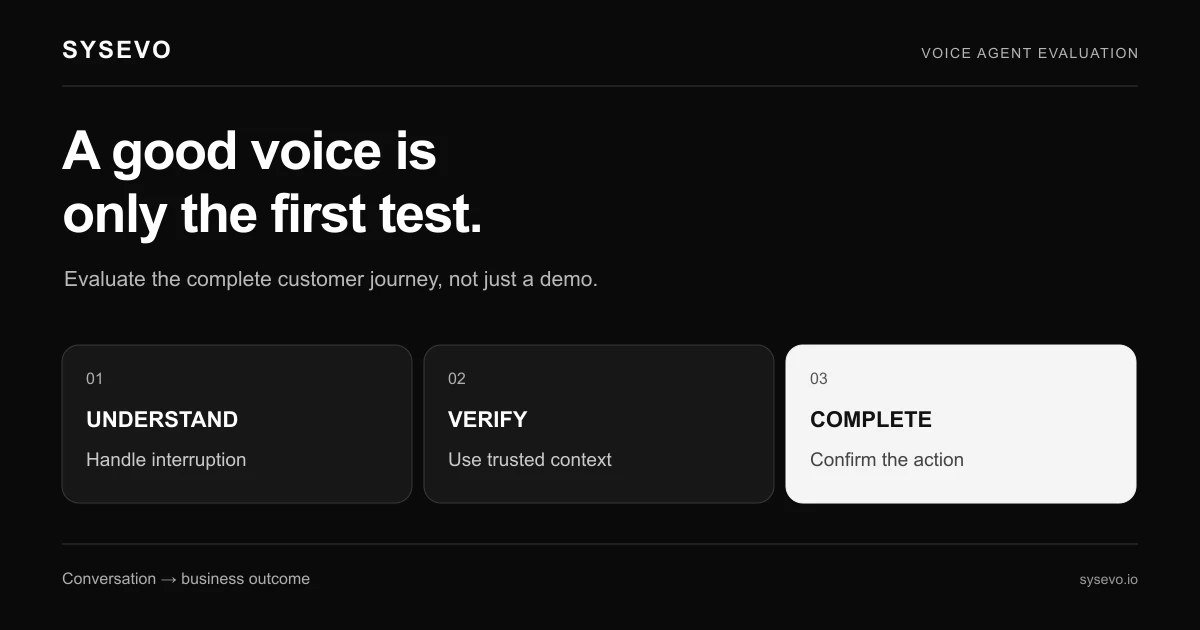
Request a trial. Most platforms offer 14 to 30 days of testing. During the trial, design a conversation flow for your single most common call type. Route 50 calls through the AI and monitor the results. Measure handoff rate (calls transferred to humans), resolution rate (calls handled entirely by AI), and customer satisfaction on transferred calls. Did customers feel frustrated when handed off? Did data get captured accurately? These metrics matter more than features listed on a website.
Check integration feasibility. Document your CRM platform, phone system, and any other business-critical tools. Ask the Zanus sales team directly: "What custom development would be required to integrate with our setup?" Get a quote in writing. Add 20 percent to it (integration always runs over). Add that number to the platform cost when doing your ROI calculation. If the total cost doesn't pay back within 12 months, delay the project. Technology that doesn't pay back is not a bargain.
Frequently Asked Questions
Does Zanus AI work with my CRM?
Zanus integrates with major platforms like Salesforce, HubSpot, and others. Check the integration list on their site. If your CRM isn't listed, integration is possible via API but requires development work. Confirm the scope and cost with their team before committing.
How long does it take to set up a Zanus AI voice agent?
Basic setup takes two to five days. Designing and training the agent for your specific scenarios takes two to four weeks, depending on complexity. Ongoing tuning is continuous; most teams iterate monthly based on call performance.
Can Zanus AI handle complex, multi-turn conversations?
It can handle structured multi-turn conversations, but struggles with unpredictable topics or conversations where intent changes mid-call. If your callers follow a clear script and ask predictable questions, it works well. If conversations are open-ended, human escalation rates will be high.
What happens if I exceed my call minutes during a month?
Overage minutes are charged at your per-minute rate, sometimes higher. Monitor usage weekly during the first month to predict demand accurately. If you're consistently over budget, renegotiate your plan to a higher tier or switch to a flat-rate platform.
Is the voice quality good enough to sound professional?
Yes. Zanus offers multiple voice options, and custom voices are available. Quality is comparable to other voice AI platforms. The limitation is personality, not voice. A professional-sounding AI can still fail if the conversation design is poor.
Can Zanus AI make outbound calls, or just handle inbound?
Zanus is primarily inbound (handling calls to you). If you need outbound calling, check whether their offering includes that feature or if you need a separate platform for outbound voice campaigns.
How do I know if voice AI is right for my business?
If more than 70 percent of your calls are predictable, involve no judgment, and are handled at volume (300+ calls per month), AI makes economic sense. Run a trial to confirm before purchasing.