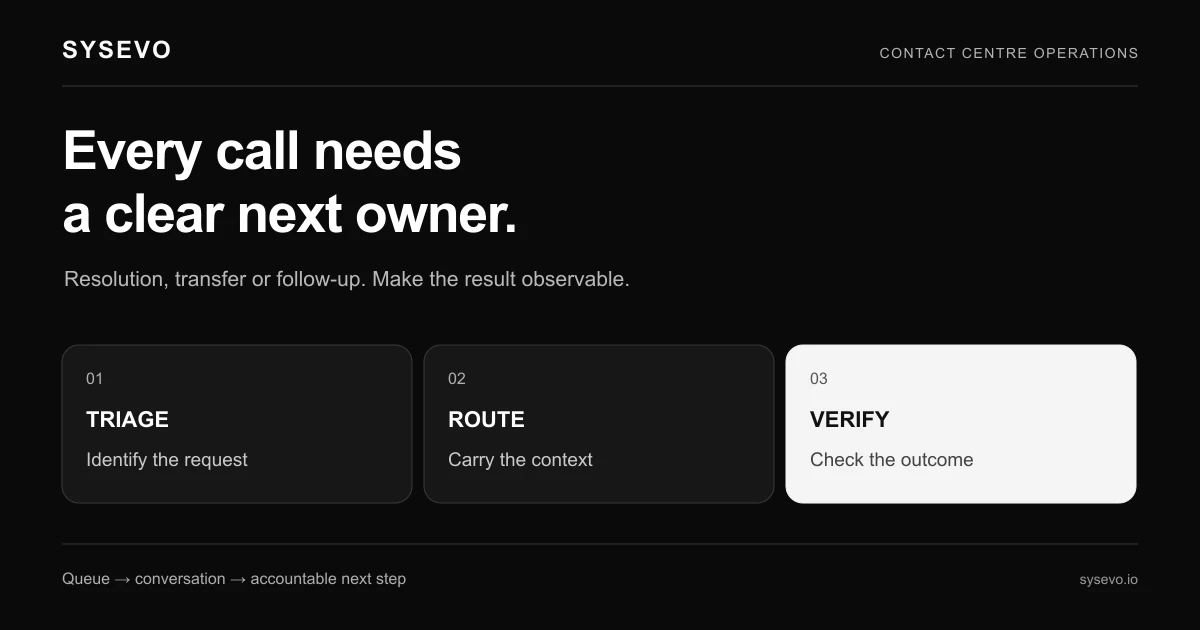

AI personalisation at scale means giving every customer the feeling of being known, without your team manually reviewing their history before every call. When a caller reaches your business and an AI voice agent recognises them, recalls their last purchase, acknowledges their specific needs, and routes them to the right outcome, you've achieved what most businesses chase: relevance at volume.
The mechanism is deceptively simple: a customer calls in, the system matches them against your database in real-time, retrieves their interaction history, and feeds that context to the AI agent before the conversation even starts. But the execution, keeping that data current, making it accessible within milliseconds, and ensuring the AI actually uses it naturally, is where most attempts fail.
Why Customer Memory in AI Matters Now
Contact centres handle between 50 and 500 inbound calls per day depending on business size. Studies from contact centre operators show that when a customer has to repeat themselves ("I've already told you this") resolution times extend by 40% and satisfaction scores drop by 15 percentage points. An AI agent with access to previous conversation notes, purchase history, and service tickets eliminates that friction in seconds.
The second driver is cost. Your existing CRM already contains customer memory; the problem is your team doesn't have time to search it. A customer service rep spends an average of 2 minutes per call just finding the right account and reviewing notes. That's dead time. An AI system that does this lookup and context-setting automatically recoups those minutes across 100 calls per agent per day, roughly 3.3 hours of reclaimed capacity weekly per team member.
Thirdly, personalised interactions convert. Businesses using AI systems with integrated CRM memory report that callers are 35% more likely to complete the intended transaction on the first call rather than asking for a callback or escalation. The customer feels understood. The pathway to resolution is clear. The AI doesn't waste time gathering baseline information.
How AI Personalisation at Scale Actually Works
The architecture has three layers. First, the inbound trigger: when a call arrives, the system captures the caller's phone number and matches it against your customer database, usually within 200 milliseconds. This match can pull from Salesforce, HubSpot, Pipedrive, or a custom database. If the system finds a match, it retrieves the customer record: name, company, last interaction date, open issues, purchase value, and any tagged preferences or notes.
Second is the context window. The AI agent receives this data as prompt instructions before the caller speaks. These aren't just facts; they're weighted by relevance. Recent interactions rank higher. Open tickets take priority. If a customer called three days ago about a billing dispute, the AI agent's opening will acknowledge that directly rather than launching into a generic script. This is where memory becomes personality: the customer experiences continuity, not a reset.
Third is the conversation itself. During the call, the AI captures new information (what was discussed, any commitments made, next steps) and writes it back to the CRM in real-time. Some systems do this asynchronously after the call; better systems append notes and trigger automations mid-conversation. If a customer agrees to a callback tomorrow at 2 PM, a calendar entry should exist before the call ends.
The Role of Embeddings and Semantic Search
Modern AI personalisation doesn't just match on exact fields. It uses embeddings (a technique that converts text into numerical vectors) to find semantically related information. A customer might have left a note saying "still interested but budget frozen until Q3." An AI doesn't need that exact phrase in a field; it can search across all notes, find the closest meaning, and understand the customer's financial constraint. This semantic layer unlocks context from unstructured data that traditional CRM searches would miss.
Building Customer Context Without Manual Data Work
The appeal of AI personalisation is obvious; the pain point is getting the data clean and feeding it forward. Many businesses have fragmented customer records: a contact exists in three places with different phone numbers, email on file is outdated, and last interaction notes are sparse. AI can't personalise what it can't read.
The practical solution is to start with what you have. If your CRM has 70% complete records, the AI still works on those 70%. It degrades gracefully, less history means less personalisation, but the call still completes. You don't need perfect data to launch. What you do need is a clear owner for data quality. Assigning one team member (often an operations lead or junior analyst) 30 minutes per week to flag duplicates, update phone numbers, and clean phone-number fields prevents decay.
Some AI voice agent platforms now include automated data enrichment: they scan conversation transcripts, extract key facts, and merge them back into CRM records without human touching. This closes the feedback loop. After 50 calls, your CRM records automatically become richer. Sysevo's approach includes this, every call updates the underlying customer record, so your data becomes more useful for the next interaction automatically.
Real-World Example: Professional Services Firm
A mid-market consulting firm with 40 clients and 8 service delivery leads receives 60 inbound calls per day, mostly from existing clients checking on project status or submitting new requests. Without AI memory, the pattern was: receptionist answers, pulls up project file, transfers to the right lead. If the lead is busy, the client leaves a voicemail and waits for a callback. Average resolution time: 4 hours. Average customer satisfaction: 6.8/10.
After implementing AI voice agents with built-in customer memory, the flow changed. Calls are answered immediately. The AI checks the customer's active projects, recent deliverables, and open change requests. It can confirm project status in real-time, log the call in the project record, and only escalate if something requires human judgment. 70% of calls now resolve without transfer. Average resolution time: 8 minutes. Customer satisfaction rose to 8.4/10. The firm now handles 140 calls per day with the same team, and leads spend their time on delivery, not status updates.
Integrating AI Personalisation with Your Existing CRM
The integration layer matters. Salesforce, HubSpot, Pipedrive, and other major CRMs expose their data via APIs, but real-time latency varies. A call centre using a custom legacy system might not have an API at all. Before buying any AI voice system, confirm that your CRM can be read and written to within your technical comfort level.
Most modern platforms offer pre-built connectors. Sysevo connects directly to Salesforce and HubSpot, pulls customer records on inbound calls, and writes call summaries and CRM updates back immediately. Setup takes a day once credentials are shared. If your CRM isn't on the common list (say you use a proprietary system built in-house) you'll need custom integration work. Budget 2–4 weeks and £2,000–£8,000 in development costs depending on complexity.
One overlooked detail: permissions. Not every CRM user needs access to all customer data. Ensure your AI integration respects role-based access controls. If an agent can't read a particular customer's file in Salesforce, the AI shouldn't either. This protects you legally and prevents data mishaps.
When AI Personalisation Struggles, And When It Shouldn't Be Used
Be honest about limitations. AI personalisation works best when you have a repeating customer base, SaaS support, e-commerce, financial services, utilities. It works poorly when every caller is a stranger: a cold leads list, pure inbound sales without repeat interaction, or a call centre for a public agency that deals with one-off inquiries. The system has nothing to remember if no one calls twice.
Second, if your team isn't using your CRM, AI personalisation won't help. If your sales lead manually tracks deals in a spreadsheet and customer notes live in Gmail, your AI agent will have no context. Fixing this requires discipline: every interaction has to be logged. That's a business process change, not a software change. Some teams aren't ready.
Third, sensitive data requires caution. If your business handles regulated information, healthcare records, legal privileged information, financial data subject to compliance rules; you need to understand where the AI platform stores transcripts and context. Some platforms retain call data indefinitely. Others delete it after 30 days. GDPR and similar regulations may require you to delete customer data on request. Confirm the platform's data retention and deletion policies before signing.
Finally, AI personalisation is expensive to build in-house. If you have a 15-person team and no dedicated AI engineering, building and maintaining your own voice AI system with memory is a 2–3 person-year effort minimum. Use a third-party platform unless you have either the expertise on staff or the budget to hire it.
Measuring the Impact of Customer Memory AI
Track three metrics. First, call resolution rate: what percentage of calls complete without transfer or callback? Baseline for traditional contact centres is 40–55%. Businesses with AI personalisation typically reach 65–80%. Second, average handle time: how long from start to finish? A personalised AI call should be 20–30% shorter than a traditional call because the context is already loaded. Third, customer satisfaction: track NPS or CSAT before and after. Most operators report a 2–4 point gain within the first three months.
Less obvious but equally important: cost per contact. If your blended labour cost is £8 per inbound call (salary, overhead, benefits amortised), and you handle 200 calls per day, that's £1,600 daily. An AI voice system that costs £400 per month breaks even after one week if it reduces call volume by just 6%. After that, every call saved is direct margin improvement. Track this monthly.
One firm we spoke to (a telecommunications provider handling 500 inbound calls daily) reported that within 6 months of deploying AI voice agents with CRM integration, they reduced staffing in their inbound team by 2 FTEs (full-time equivalents) due to improved call handling and resolution rates. They didn't lay anyone off; they redeployed those two people to outbound AI campaigns and retention work. The business made money on the software within 18 weeks.
Choosing the Right Platform for AI Personalisation at Scale
The market has several tiers. At the low end (£500–£2,000 per month), you have platforms like Voicebot or Cognigy that handle basic IVR flows with limited CRM integration. They work for very simple use cases: "press 1 for billing, press 2 for support." But they don't remember customers or hold natural conversations.
The mid-market (£2,000–£8,000 per month) includes platforms with genuine AI conversations and CRM memory. These integrate with Salesforce or HubSpot, pull customer history, and handle moderate complexity. Most landing them report that this tier suits them best, feature-complete, pricing sensible, integration straightforward.
At the high end (£15,000+ per month), you have enterprise platforms with custom integrations, white-label options, and dedicated support. These make sense for large contact centres (500+ calls daily) or highly regulated industries where compliance and customisation are non-negotiable.
Before choosing, audit your call volume, CRM platform, and integration complexity. If you handle under 150 calls per day and use HubSpot or Salesforce, the mid-market tier suits you. Request a pilot: 2–4 weeks of free testing on a subset of your queue. Measure resolution rate, handle time, and customer feedback in real conditions. Only buy after you've seen it work on your actual calls with your actual customers.
Implementation Roadmap for AI Personalisation
Month one focuses on integration. You'll connect your CRM, define which fields the AI needs access to, and test data flow. This is technical but not complex. Your IT team or a third-party integrator handles it. No customer-facing changes yet.
Month two is pilot testing. Route 10–20% of your inbound calls to the AI system. Monitor call recordings, customer feedback, and AI accuracy. Fix obvious mistakes: misspoken names, misrouted calls, incorrect context retrieval. This is where you learn what your data quality actually is. You'll find gaps, missing phone numbers, outdated contact info, incomplete notes. Start fixing them.
Month three is rollout. Expand to 50% of calls, then 100% over the next 2–4 weeks. Train your team on the new process: they won't be answering every call anymore, but they'll be handling escalations and complex issues. Make sure they know how the AI captures their responses and updates the CRM so they can trust the system.
Month four onwards is tuning. Every business has quirks. Maybe your customers prefer speaking to a human for certain account types. Maybe the AI misunderstands a key phrase unique to your industry. Work with your platform provider to refine prompts, adjust transfer logic, and optimise the experience. Custom solutions might be necessary here if your use case is unusual.
The Future of AI Memory and Personalisation
The next frontier is multi-channel memory. Today, most AI voice systems remember phone interactions. Tomorrow, they'll remember email, chat, and in-app interactions too. Imagine a customer emails support Monday, calls Thursday, and opens the app Friday. The AI remembers all three and picks up the conversation from where it left off. Few platforms do this well yet, but it's coming.
Predictive personalisation is another trend: rather than just remembering what happened, the AI predicts what the customer might need next. If a customer's subscription renews in 2 weeks and they haven't logged in this month, the AI proactively reaches out with a tip about a new feature. This moves personalisation from responsive to proactive.
Privacy and regulation will tighten. Expect stricter rules around voice data storage, transcription retention, and consent. Platforms that excel here will have advantages. Choose one that treats compliance seriously now, not one that waits for regulators to force their hand.
Frequently Asked Questions
How long does it take to implement AI personalisation?
Integration and testing typically takes 4–8 weeks depending on your CRM complexity and data quality. If you use Salesforce or HubSpot with clean records, expect 4 weeks. Custom systems or fragmented data can extend this to 8–12 weeks. Pilot testing should run 2–4 weeks before full rollout.
Will AI personalisation work if we have incomplete customer records?
Yes, with degradation. If 70% of your records are complete, the AI personalises 70% of calls. It handles the other 30% with generic courtesy. Clean data up over time; you don't need perfection to launch. Most teams see data quality improve naturally as the AI flags gaps during conversations.
How much does AI voice personalisation cost?
Mid-market platforms range from £2,000 to £8,000 per month depending on call volume and features. Simpler IVR solutions start at £500/month. Enterprise custom builds can exceed £15,000/month. Pricing usually scales with call volume, so a 50-call-per-day business pays less than a 500-call-per-day business.
Can AI personalisation work with our legacy CRM system?
Possibly, but it requires custom integration. If your CRM has an API, a developer can build a connector in 2–4 weeks for £2,000–£8,000. If it has no API, you may need to migrate to a modern platform first. Check with your vendor whether integration is feasible before committing to an AI platform.
What happens to call recordings and customer data after the call?
It depends on the platform. Most store transcripts and customer context updates in your CRM immediately. Call recordings are retained for 30–90 days by default, then deleted. Confirm your platform's retention policy, especially if you're in a regulated industry like finance or healthcare. GDPR requires you to delete customer data on request, so ensure the platform can do that.
Will AI personalisation replace my customer service team?
No. It replaces 60–70% of simple, repetitive calls. Your team handles escalations, complex issues, and customers who demand human contact. You typically redeploy saved capacity to higher-value work: retention, upsell, or outbound support. Most businesses don't cut headcount; they shift roles.
How do we ensure the AI is using customer data correctly and securely?
Audit data access controls within your CRM first, ensure the AI integration respects role-based permissions. Request SOC 2 or ISO 27001 certification from your AI platform vendor. Ask where data is stored and whether encryption is end-to-end. Request regular penetration test reports. Security isn't negotiable; build it into your selection criteria.
Ready to explore AI personalisation for your business? Learn how Sysevo's voice AI with built-in CRM memory can transform your customer interactions, or review our flexible plans tailored to your call volume and business model.