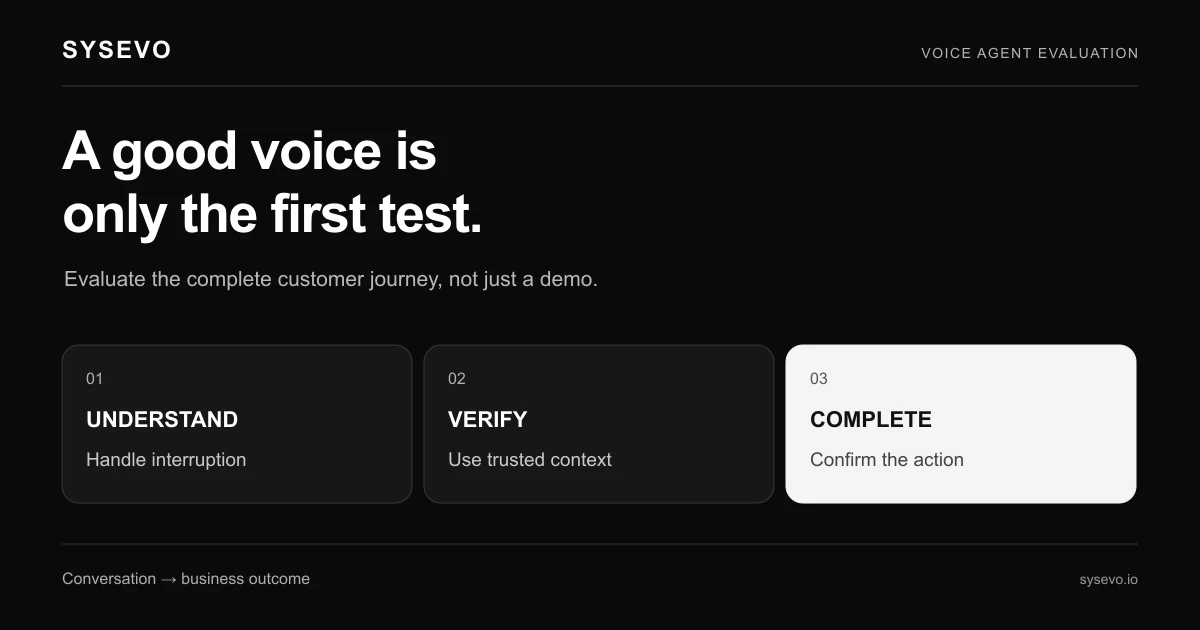
Use a Zanus AI trial to verify one complete business task, not just whether you like the voice. Prepare the expected answer and saved outcome before each test, then inspect the records after the conversation.
Independent buyer's guide from Sysevo, a competing provider. We are not affiliated with Zanus AI. This is not a hands-on product review. Official sources checked on 1 November 2026; confirm current product and contract details directly.
What the published trial offer establishes
The official Front Office pricing page advertises a seven-day trial without a credit card. Confirm the current offer, included usage and enabled modules when you register. A trial offer does not establish that every feature, integration or implementation service is included.
Start with the AI Phone description and choose the part that matches your need. A website-generated demo can help you hear the proposed interaction; your own test should also establish the rules, connections and handoffs required for real calls.
Choose one journey and write the answer key
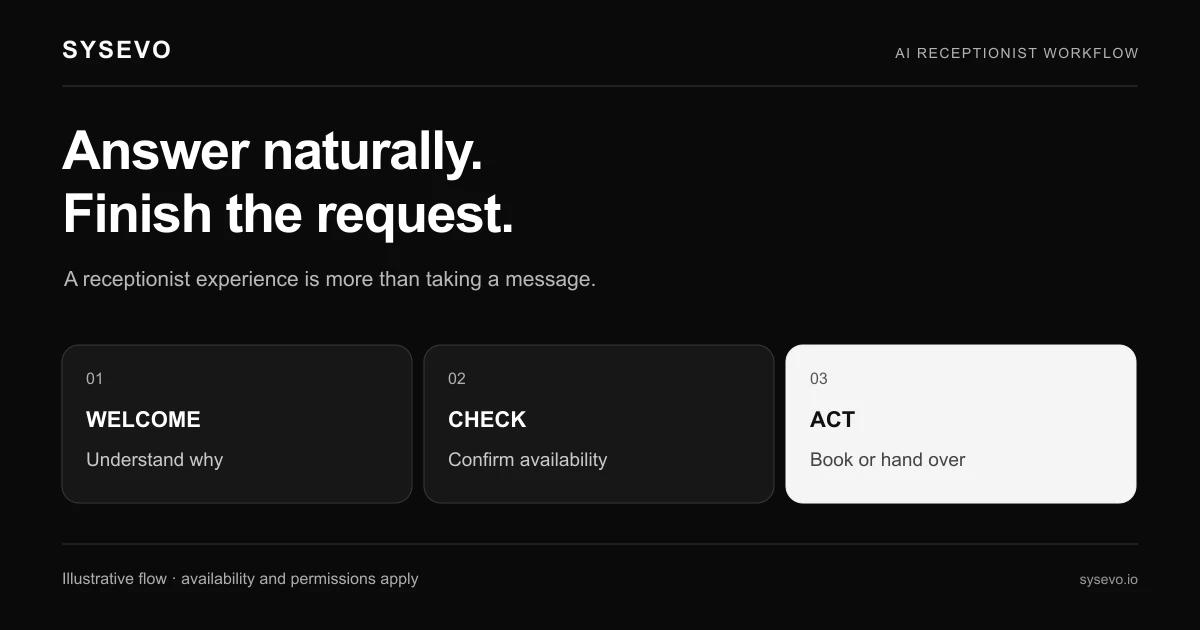
For example, use a fictional new customer asking about a service, requesting a time and needing a callback when that time is unavailable. Supply approved service information and decide what counts as completed: a saved appointment, an assigned callback or a clearly labelled enquiry.
Give a second tester the scenario without telling them which words make the demo succeed. Let them interrupt, correct a name and ask an unanticipated follow-up. This helps distinguish a flexible workflow from a memorised demonstration without using real customer information.
| Test | Evidence to save |
|---|---|
| Known question | The answer agrees with the approved source |
| Unknown question | The agent follows the agreed clarification or handoff rule |
| Booking or callback | The intended record exists with correct details and ownership |
| Correction during the call | The final record reflects the corrected information |
| Unanswered transfer | The fallback leaves a visible, assigned next action |
Look at records before declaring a pass
Inspect the final contact, appointment and task as a staff member. Check names, phone numbers, date, time zone and owner. If the agent says a notification was sent, confirm its delivery status or the staff view rather than accepting the spoken claim as proof.
Separate a helpful partial outcome from a completed task. Capturing a preferred time is useful, but it is not a confirmed booking. Taking a message is useful, but it is not a successful transfer. Your scorecard should allow these different outcomes rather than forcing every call into success or failure.
Include controlled failure cases
Ask the vendor to demonstrate an unavailable calendar or another agreed connection failure in a test environment. Observe the explanation to the caller and the work left for staff. A failed action should not turn into a false promise or disappear in an unreviewed transcript.
Repeat a scenario after changing one knowledge item or business rule. Record which version was tested and whether the update affected other answers. Keep the scope small enough that you can inspect every result, rather than rushing to exercise the entire product suite during the trial.
Read reviews alongside your own evidence
A useful reference describes a comparable workflow, operating conditions and the work staff still perform. Ask how long the deployment has been running and what was measured. Do not treat a short testimonial, a vendor example and an independent trial as interchangeable evidence.
Our existing Zanus AI reviews guide covers the questions to ask about outside evidence. Keep your own trial log alongside those answers, and note any requirements that remain untested before making a purchase decision.
Use a decision record at the end of the trial
Summarise what passed, what needs configuration and what has not been demonstrated. Estimate ongoing review and correction time. Request written prices and implementation scope for the actual workflow, including required connections and support.
For an alternative, use the Sysevo comparison and request the same scenario in a workflow demonstration. The goal is evidence you can compare, including the saved records and the human work left afterwards.
Questions buyers ask
Does a good demo prove the workflow is ready for customers?
It demonstrates that scenario under those conditions. Verify your own rules, records, connections and failure handling before expanding to real customer calls.
What should we test if the trial is short?
Choose one important journey and include a correction, an unavailable option and a failed transfer or external action. Inspect every resulting record.
What should we keep after the trial?
Keep the scenario, approved information, configuration date, outcome evidence, remaining staff work and written answers about scope and pricing.
Related buying guides