
Multi-location call answering AI handles inbound calls across multiple sites, branches, or franchises from a single system, capturing caller information and routing inquiries without human staff picking up the phone. For businesses with three or more locations, this changes the economics of call handling. Instead of paying for reception staff or answering services at each site, or rotating coverage calls between managers, a voice agent answers calls the moment they arrive, identifies what the caller needs, writes it to your CRM, and either books an appointment or transfers the call to the right location in seconds.
The value is simple: no missed calls, consistent greeting at every site, and data that flows automatically into your systems. But the mechanics matter, and so do the genuine limits. This article covers how the technology works, what it actually costs, and which businesses should wait.
How Multi-Location Call Answering AI Works
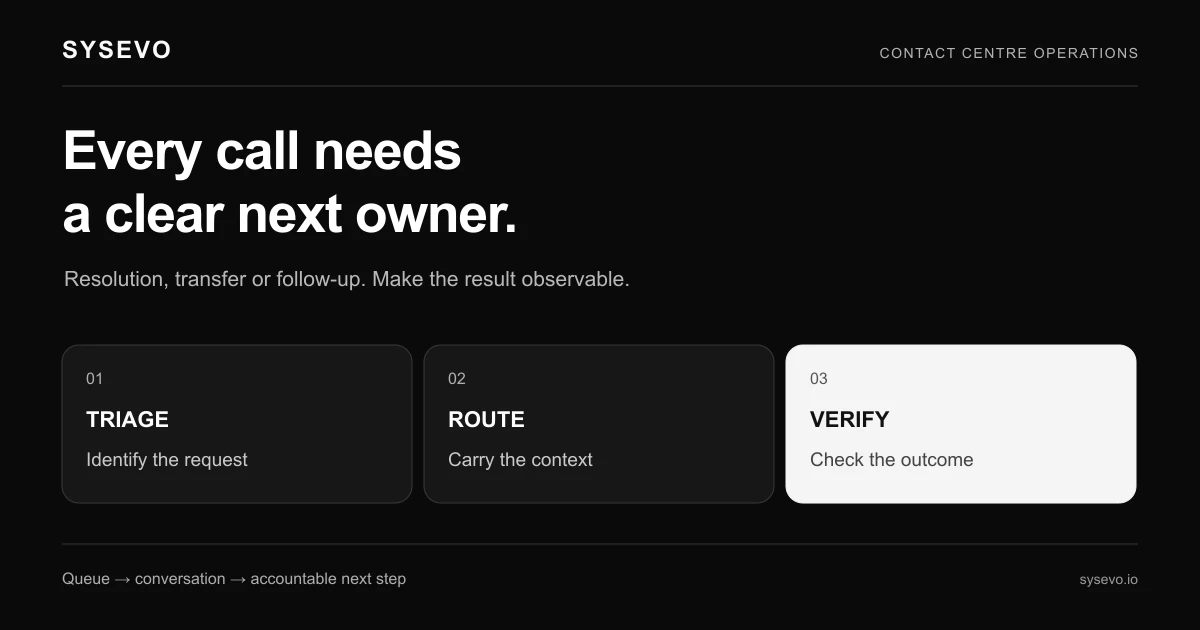
A voice agent is deployed to a single phone number or integrated with your existing location-specific numbers. When a call arrives, the agent answers within two seconds, listens to the caller's reason, and makes a routing decision based on what it hears. If a caller says "I'd like to book a haircut at your city centre location," the agent understands location intent, checks availability in your CRM for that specific branch, and books the appointment directly. If the caller needs specialist information, the agent transfers to the right manager or location manager without putting them on hold first.
The agent collects caller name, phone number, issue type, preferred location, and any other detail relevant to your business, and writes it to your built-in CRM instantly. Because the same agent system serves all locations, it learns your business rules once and applies them everywhere. A multi-location dental practice reports that implementing AI call handling reduced missed appointment bookings by 35% across five sites because the system books before the call ends, rather than asking the caller to "call back during office hours." That consistency matters: a caller who books at location A expects the same experience at location B.
The agent is also equipped with memory. On the second call from the same number, it recalls the previous conversation without asking the caller to repeat themselves, which builds the impression of a shared reception team rather than isolated branch staff. This is particularly valuable for franchise models where a customer might contact different locations and expect a seamless experience.
Multi-Location Call Answering AI for Franchises and Multi-Site Businesses
Franchises face a specific call-handling problem: each franchisee typically hires their own reception or runs calls themselves, which means inconsistent greeting standards, different quality of call capture, and no visibility at the franchisor level into customer inquiries across the network. A 20-unit franchise chain in pest control or home services spends £800 to £1,200 per location per month on either part-time reception or answering service coverage. That's £16,000 to £24,000 monthly across the network, and calls are still lost during lunch or peak service times.
Multi-location phone automation solves this by creating a single call gateway for all 20 locations. Franchisees keep their local numbers but calls are answered by the AI agent, which routes incoming work to the correct branch based on postcode, caller reference, or caller preference. A home services franchise reports that unified AI call handling captured 40% more service requests in the first month, because calls that previously went unanswered during peak hours now generate job tickets automatically. The franchisee still handles the work; the AI handles the initial intake.
For franchisors, this also solves compliance and quality control. Every call is logged, transcribed, and stored in a central system. The franchisor can review call volumes by location, identify which franchisees are losing calls, and ensure brand messaging is consistent. That visibility costs nothing to implement once the system is in place and provides data that manual coverage simply cannot.
What Multi-Site AI Receptionist Costs and Where Money Is Actually Saved
Pricing varies by platform and call volume. Entry-level AI voice agent plans start around £150 to £300 per month for up to 200 calls, which suits small three-location practices. Mid-market packages run £500 to £1,200 monthly for 500 to 2,000 calls across all sites. Enterprise implementations with custom routing, advanced CRM integration, and dedicated support exceed £2,000 monthly. The cost is fixed regardless of whether you have 3 locations or 30, which is the key advantage over answering services that charge per call.
Real savings come from replacing answering services and reception staff. A single part-time receptionist costs £12,000 to £18,000 annually per location. An answering service costs £200 to £400 monthly per location. A multi-location AI system serving five sites at £800 monthly replaces £1,000 to £2,000 per month in alternative coverage. Over a year, that's £2,400 to £14,400 saved. But the less obvious saving is in appointment no-shows and missed revenue. When an appointment is booked in the moment and confirmed in your CRM, no-show rates drop by 20% to 30% according to operators who implement automated booking. For a dental practice with 50 appointments weekly across five sites, that's 5 to 7 additional paid appointments per week, or £10,000 to £18,000 per year in recovered revenue.
Savings also accrue in staff time. Managers no longer spend 90 minutes daily answering phones or checking voicemails. One salon owner with three locations reports reclaiming approximately 7.5 hours weekly previously spent on call triage and appointment logging. That time now goes to customer care or business development. The financial value of that time is real but harder to quantify than direct cost reduction.
Where Multi-Location Phone Automation Fails or Doesn't Fit
The technology struggles with complex intake conversations. If your business requires a 15-minute conversation to diagnose a problem or qualify a lead, an AI agent will capture the opening details but will not replace the full conversation. Legal firms, high-value consulting practices, and B2B services where the call itself is part of the sales process need human involvement for most calls. An AI agent can collect contact details and triage urgency, but it cannot close a £50,000 contract or handle objections. In these cases, AI call answering works as a first screen, not a replacement.
Secondly, if your callers predominantly speak with heavy regional accents, non-standard English, or languages beyond English, accuracy drops. Most AI voice agents work reliably on clear spoken English but require tuning for strong accents or multilingual input. A business in a region with a high proportion of non-English speakers should pilot the technology before deploying it across all locations; some platforms handle this better than others, but it remains a limitation.
Third, if your business model relies on building rapport on the first call or if your customers expect to speak to a human immediately, they will notice they are speaking to a machine. Some industries tolerate this well: healthcare practices, home services, and retail expect automated initial intake. Others do not: luxury services, wealth management, and high-touch B2B sales often trigger customer frustration or perceive automated answering as cost-cutting. Pilot the experience with real customers from your market before full rollout.
Integration with Your Existing Systems and CRM
The value of multi-location call answering AI multiplies when it connects to your CRM. A standalone system that answers calls but does not write to your appointment book or customer database is friction, not automation. Before choosing a platform, confirm it integrates with your existing CRM or practice management system. Most mainstream providers integrate with systems like HubSpot, Salesforce, Practice Manager, Dentally, or local practice-specific software, but integration depth varies. Some platforms write only basic fields; others map custom fields, create follow-up tasks, and trigger workflows.
The simplest integration is a built-in CRM. If your AI voice system includes its own customer database, you eliminate the step of choosing and configuring a third-party CRM connection. Data stays in one place, reporting is straightforward, and all locations see the same customer history. For small to mid-market businesses with no existing CRM, this is often faster than buying a separate CRM and configuring integrations. For larger businesses with entrenched CRM systems, you may need custom integration work, which adds cost and timeline.
Ask your platform vendor: How is caller data stored? Can multiple locations query the same caller record? How quickly does data sync from the voice system to the CRM? Are there per-call costs for CRM writes, or is integration included? A platform that charges £0.10 per call for CRM integration on 1,000 monthly calls adds £100 monthly in hidden costs. Clarify this before signing.
Getting Started: Pilot, Measure, Scale
The safest path is a one-month pilot at a single location. Choose your busiest or most under-resourced site, route half its calls to the AI agent, and keep the other half on your existing system. After 30 days, measure: How many calls did the AI answer? How many did it book? How many did it route to staff? What was the customer satisfaction? Did staff time reduce? Did any calls fail or create negative feedback? Use this data to decide whether to expand or adjust the configuration.
During the pilot, invest time in training the agent on your business rules. Provide it with your most common questions, appointment types, pricing, cancellation policy, and location-specific details. The more context you give the system upfront, the better it performs. Many vendors offer a setup call where they configure the agent for you, but you are the expert on your business. The more you articulate your exact workflows, the better the result.
After the pilot, if results are positive, scale to all locations. This is when booking a call with a provider to discuss volume pricing and multi-location configuration makes sense. Most platforms charge less per location when you add the second and third site, so the total cost of rolling out across five locations is often lower per-location than the pilot cost.
Frequently Asked Questions
Can an AI voice agent handle calls in multiple languages?
Most platforms support English reliably. Spanish, French, and German are available on some systems, but quality and feature set vary. If multilingual is essential, test the specific languages with your vendor before committing. Regional accents within a language also affect accuracy; Mandarin or Arabic support is still emerging across platforms.
What happens if the AI agent cannot understand the caller?
Reputable systems detect when confidence is low and transfer the call to a human staff member or voicemail, depending on your configuration. No call should be dropped. The agent logs the failed interaction so you can review it and improve its training.
Can we use multi-location AI with our existing phone numbers?
Yes. The AI agent can be deployed behind your existing location-specific numbers, or you can use a single central number and have the agent route to location-specific extensions. Most platforms integrate with standard VoIP systems or PSTN lines without requiring a full phone system replacement.
How long does setup take?
Basic setup takes 3 to 7 days if you provide your business details and pricing upfront. Complex setups with multiple custom workflows, integration to a legacy system, or multilocation routing rules can take 2 to 3 weeks. Budget time for your team to review configuration before go-live.
What if a customer complains they spoke to a machine?
First, the agent typically discloses itself within the greeting. Second, if this is a common complaint, it suggests the technology is not the right fit for your customer base. Consider using it for intake only and ensuring easy transfer to a human for customers who request it, rather than eliminating human contact entirely.
Can the system handle peak call volume spikes?
Yes. Unlike human receptionists, an AI agent can handle 10 simultaneous calls or 100 without degradation in response time. This is one of the genuine technical advantages. Volume-based pricing caps apply, but within your plan limit, spikes are not a problem.