
FreJun and Teler are pushing enterprise voice AI forward with tools designed to handle real business workflows, as IT Voice Media reported in August 2026. The practical question for operations leaders is not whether voice AI works, but where it fits into your operation, what it actually costs, and which problems it solves versus which it creates.
Voice AI has moved past proof of concept. Enterprises are now running these systems in production across customer service, compliance, and back-office work. The shift matters because it changes how you evaluate the technology. You are no longer asking whether an AI voice agent can make a call. You are asking whether it can make the right call, handle exceptions, and integrate with your existing tools without creating new manual work downstream.
What FreJun And Teler Reveal About Current Voice AI Capability
The FreJun and Teler announcement signals a maturing market where vendors are moving beyond generic call answering toward industry-specific applications. These platforms appear focused on reducing the friction between voice capture and action, which is where most deployments actually fail. A voice agent that records a call but leaves the notes unstructured, or that books a callback without checking availability, creates work rather than eliminating it.
Industry benchmarks suggest that businesses using voice AI for inbound calls report a 35 to 45 percent reduction in manual call handling time, but only when the agent can write directly to a backend system. Without that integration, you get a transcript that still requires human review. The difference between a working deployment and a failed one often comes down to whether the voice agent connects to your CRM, calendar, or knowledge base in real time, or whether it operates in isolation.
What FreJun and Teler are building reflects a broader trend: voice AI vendors are competing on how cleanly they hand off the customer intent to the rest of your stack. One platform might excel at understanding a customer's reason for calling, while another handles the follow-up booking. Most businesses need both, which is why integration architecture matters more than any single feature.
FreJun And Teler Drive AI-Powered Enterprise Voice Innovation By Solving Real Bottlenecks
The practical problems FreJun and Teler are addressing stem from how contact centers actually work. An inbound call arrives. The agent needs to understand what the caller wants, where they are in the customer journey, and what action to take next. A human does this in seconds by reading the screen and drawing on experience. An AI voice agent needs to be taught the same logic through training data, system prompts, and integration rules.
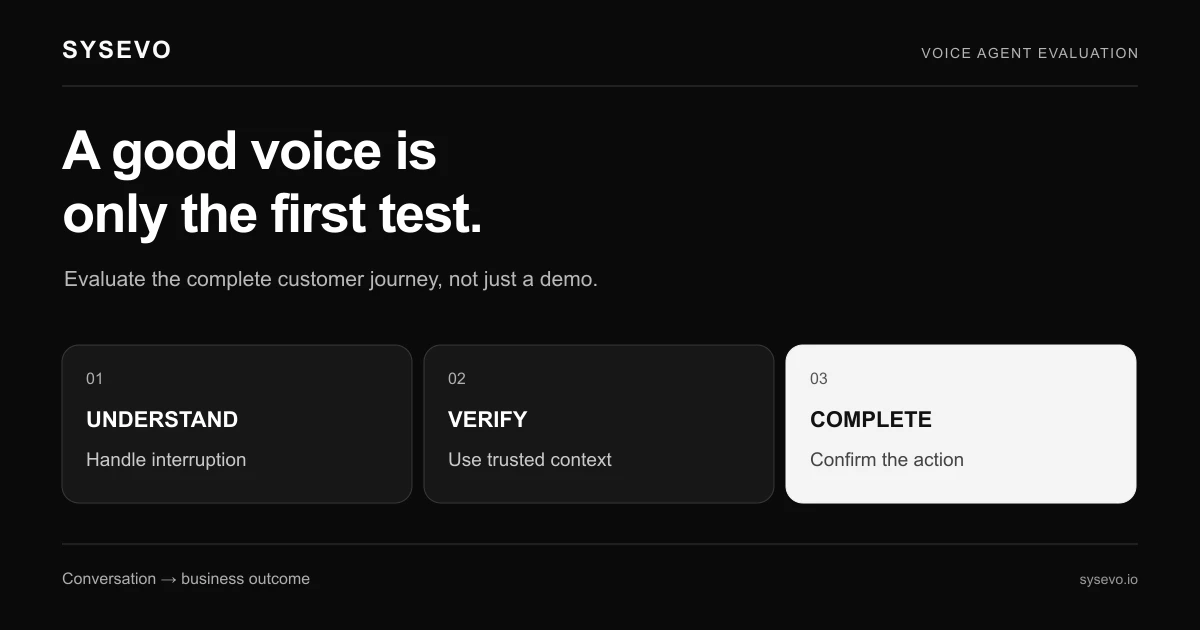
When voice AI works, the mechanism is straightforward. The call comes in. The agent picks up on the second ring. Within the first 20 seconds, it identifies the customer in your CRM by phone number or account lookup, and retrieves their history. It then routes the query based on what it hears. If it is a billing question, it escalates to an agent with access to payment systems. If it is a refund request with a clear policy match, it processes the refund and sends confirmation to the CRM. If it is ambiguous, it books a callback with a human specialist and logs the issue as a ticket.
The cost difference between a working deployment and a broken one is substantial. Operators who implement voice AI without backend integration report that they still need a human to process the voice transcripts afterward, offsetting 60 to 70 percent of the labor savings. Operators who invest in proper CRM integration and workflow automation report labor cost reductions of 40 to 50 percent on the channels where voice AI handles the majority of calls. Pricing for enterprise voice AI platforms typically ranges from $500 to $3,000 per month, depending on call volume and customization. That math only works if the agent is actually closing loops, not just taking calls.
Where Voice AI Integration Works Best In Practice
Certain business workflows are well suited to voice AI today. Appointment scheduling in healthcare or professional services is one. The voice agent asks a simple set of questions, checks availability against a system, and books the slot. The customer gets a confirmation immediately. No human intervention needed. Similarly, basic account status checks, subscription changes, and refund requests for items within a clear policy window all work reliably.
Financial services compliance is another area where voice AI is moving into production, as FinTech Global reported when discussing AI agents in bank compliance workflows. The agent conducts a call, records it to meet regulatory retention requirements, and flags it for review based on keywords or behavior patterns. Humans then review the flagged calls, but the volume going to review is lower because the system pre-filters routine interactions.
A concrete example: a telehealth provider receives 400 patient calls per day. 60 percent are appointment scheduling, medication refill requests, or billing status checks. A voice AI agent trained on that provider's workflows can handle those 240 calls per day, freeing clinical staff for complex patient interactions and callbacks. The agent costs $1,200 per month to license and integrate. The staff time saved at a loaded cost of $35 per hour is worth $18,000 per month, assuming 8 hours of handling time per person per week across the team. The math is visible and defensible.
When Voice AI Fails And Why Honest Assessment Matters
Voice AI does not work well in situations that require judgment, emotion reading, or knowledge that is not in the training data. A customer calling angry about a service failure needs a human to acknowledge the failure, take ownership, and make a decision about what to offer. An AI voice agent trained on call transcripts will pattern-match to similar calls and may deliver a technically correct response. It will not know the customer's history of loyalty, the pressure the company is under this quarter, or the unwritten rules about when to escalate. It will sound plausible and helpful, and it will make the wrong call.
The second failure mode is integration debt. A voice AI system that sits on top of legacy systems without native connectors becomes a data bottleneck. The agent takes the call, generates a transcript, and that transcript must be manually reviewed by a human before it enters the CRM. The human is doing the same work they always did, just with a transcript instead of a call recording. The cost of the platform is pure overhead. Implementations that start with poor integration planning often fail to reach ROI and get abandoned.
A third constraint is context depth. Voice AI excels at transaction calls where the context is a single question. It struggles with multi-turn conversations where the customer changes their mind, asks follow-ups that require different expertise, or needs information that would take a human 10 minutes of system navigation to find. Some vendors claim to solve this by keeping a voice agent on the line and escalating to human agents seamlessly. That is useful in some cases. It is also more expensive and slower than having a human take the call in the first place for interactions that are inherently complex.
Current Voice AI Architecture And What It Costs
Enterprise voice AI today typically runs on a modular architecture. The voice capture layer handles audio, noise filtering, and speech-to-text. The language understanding layer parses intent and entities from what was said. The business logic layer applies routing rules and system integrations. The CRM or callback scheduling layer executes the actual business action. Each layer can be provided by different vendors, or bundled by a single platform.
Sysevo, for example, bundles voice AI with built-in CRM functionality, which avoids the integration bottleneck by putting call context and action directly in the same system where the follow-up happens. That approach reduces deployment complexity. Other vendors focus on the voice agent itself and assume you will handle the integration work or hire a professional services team to do it. That is cheaper upfront but requires more technical work and longer time to value.
Setup time for a basic voice AI deployment is typically 4 to 8 weeks. That includes training data collection, system integration testing, compliance review (especially in regulated industries), and staff training. More complex deployments in financial services or healthcare can take 12 to 16 weeks due to validation and audit requirements. The cost of setup is not always quoted separately from licensing, but it typically ranges from $10,000 to $50,000 depending on how much custom workflow logic you need.
What To Evaluate Before You Commit
Start by mapping your actual call volume and call types. Which calls are repetitive and well-defined? Which require judgment or knowledge you cannot easily codify? For the first group, voice AI is worth a pilot. For the second, it is not ready.
Then audit your backend systems. Does your CRM have an API that a voice agent can write to in real time? Can your scheduling system handle automated bookings, or would a voice agent need to speak to a human to confirm? These questions are not optional. They determine whether voice AI saves labor or creates it.
Finally, understand the transition cost. Staff who were taking calls will need retraining for higher-level work, or the labor saved will become a cost reduction. Scaling voice AI across your team takes months, not weeks. Plan for that. Consider a pilot on a single team or a single call type, not an immediate company-wide rollout.
To explore how voice AI works within a complete system, book a call with our team to discuss your specific workflows and integration requirements.
Frequently Asked Questions
How long does it take to deploy an AI voice agent?
A basic deployment takes 4 to 8 weeks and includes system integration, training, and staff preparation. Regulated industries like finance or healthcare often require 12 to 16 weeks due to compliance validation. Time to ROI typically arrives 3 to 6 months after launch if the system is properly integrated with your CRM and backend workflows.
What percentage of calls can an AI voice agent handle?
Between 35 and 60 percent of inbound calls in a typical contact center are routine and well-suited to voice AI. This includes scheduling, status checks, refund requests, and policy-based inquiries. Complex issues, complaints, or calls requiring judgment should still route to humans. The actual percentage depends on your industry and call mix.
Do I need a new CRM to use voice AI?
No, but you do need your existing CRM to have an API that the voice agent can write to in real time. If your CRM cannot be integrated, you will end up with transcripts that humans have to manually process, and you will not realize labor savings. Platforms that bundle voice AI with CRM, like built-in CRM solutions, simplify this problem.
What is the cost of a voice AI platform per month?
Enterprise voice AI licensing typically costs $500 to $3,000 per month depending on call volume, customization, and whether integrations are included. A small practice with 500 calls per month will be at the lower end. A large contact center handling 50,000 calls per month will be in the mid to upper range. Setup and integration are usually separate line items.
Can voice AI understand accents and dialects?
Modern speech-to-text systems handle many accents reasonably well after training on representative data. However, very strong regional accents, multiple speakers talking simultaneously, or heavy background noise can still cause accuracy to drop. Testing with your actual customer base is essential before full rollout. Fallback to human agents remains important.
What happens when a voice AI agent cannot understand a caller?
Well-designed systems escalate to a human agent if confidence falls below a threshold, usually after 2 to 3 failed interpretation attempts. The caller should experience this as a smooth handoff, not a frustrating loop. Poor handoff design is a common reason deployments fail to meet customer satisfaction targets.
Is voice AI compliant with data protection regulations like GDPR?
Voice AI can be GDPR-compliant, but you must ensure that call recordings and transcripts are encrypted, retained only as long as necessary, and that customers are informed about recording. Compliance is not automatic. You need to audit your vendor's data handling practices and integrate voice AI with a system that enforces retention policies. Healthcare and finance require additional safeguards.