
As Business Insider reported in August 2026, Elon Musk stated that Grok will be trained on SpaceX employee data, with Musk saying it will "inherit your thoughts and ideas." This marks a significant shift in how large language models acquire training data, moving beyond public datasets toward proprietary organisational knowledge. The announcement raises practical questions for business owners evaluating AI systems: what does this data harvesting approach mean for your operations, your employee privacy, and the quality of AI tools you deploy?
What Elon Musk Says Grok Will Be Trained On
The statement that Elon Musk says Grok will be trained on SpaceX employee data signals a deliberate pivot away from internet-scraped training sets. Instead of relying on publicly available text, Grok will ingest internal communications, project documentation, decision logs, and operational patterns from SpaceX's workforce. This approach theoretically produces an AI model that understands how a specific organisation actually works, not how the general internet describes work. The model learns not just language, but domain-specific reasoning, company culture, and decision frameworks embedded in real employee interactions.
This methodology differs fundamentally from how most conversational AI systems train today. OpenAI's GPT models, Anthropic's Claude, and other mainstream systems rely on vast internet corpora supplemented by human feedback and fine-tuning. Grok's approach is organisational: it becomes a model trained on the organisational memory of a single company. That specificity could produce genuinely useful outputs for SpaceX operations, but it also creates dependency. A model trained exclusively on your company's data becomes harder to transfer, audit, or replace without retraining.
The Business Case For Proprietary Data Training
Why would a company choose this path? The answer lies in accuracy and relevance. When an AI system trained on SpaceX data encounters a question about rocket manufacturing constraints, supply chain decisions, or engineering trade-offs, it operates within a framework learned from actual SpaceX patterns. Generic models must guess at context. A SpaceX-trained model inherits institutional knowledge at scale. Industry benchmarks suggest that domain-specific AI systems outperform general-purpose ones by 20-40% on tasks within that domain, though independent verification of this figure in the SpaceX case remains limited.
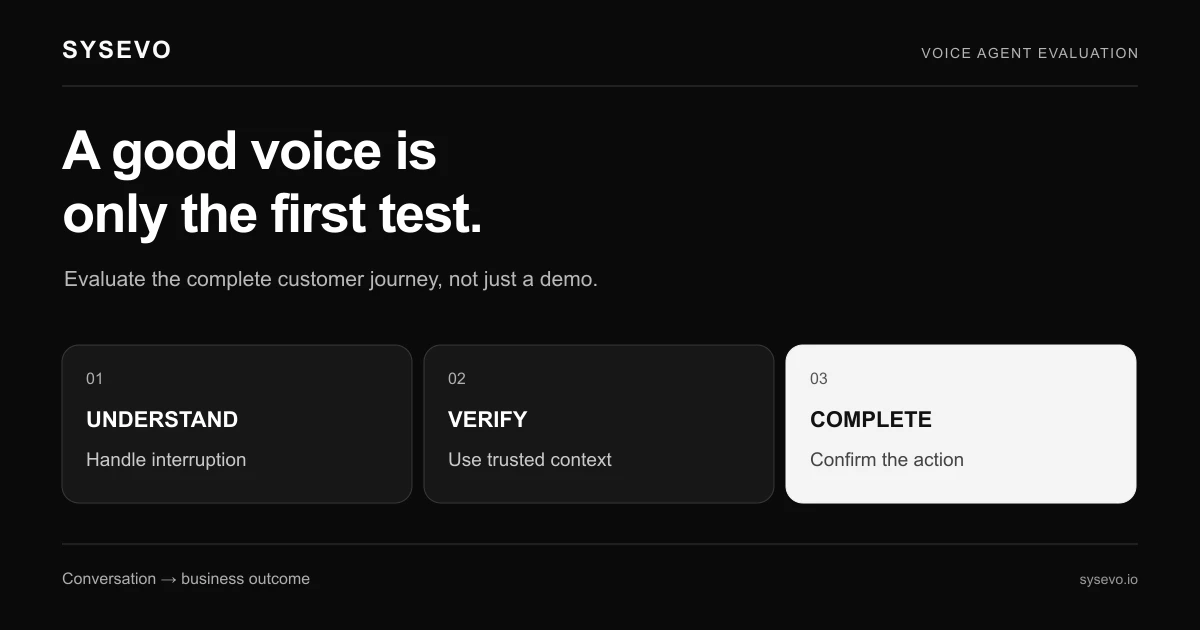
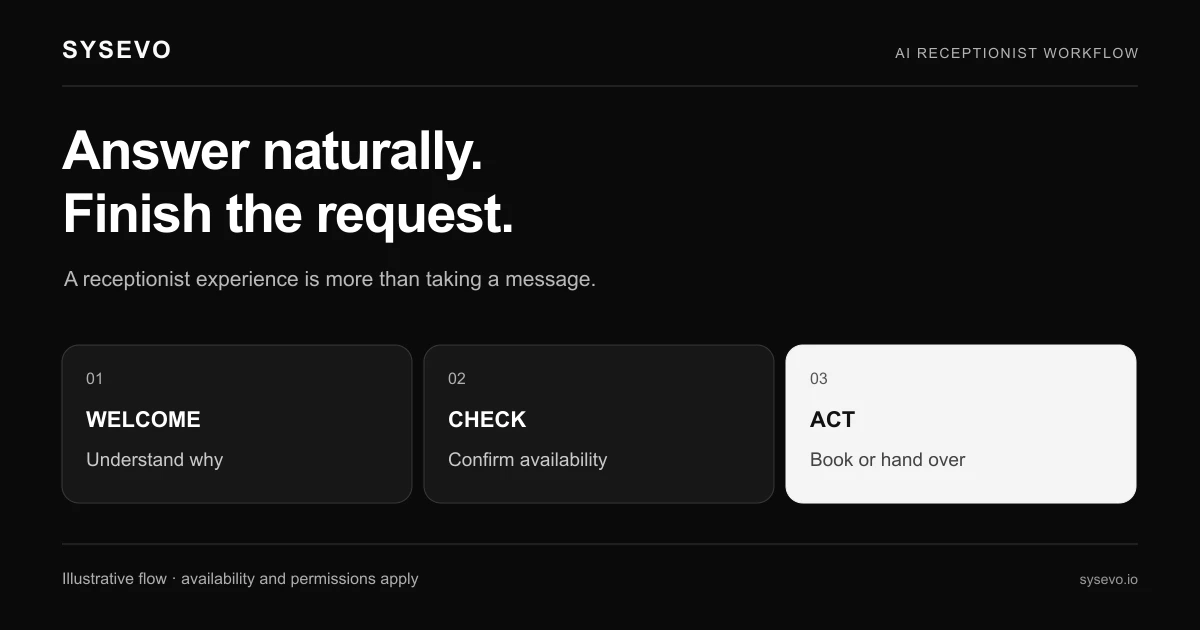
For most businesses considering voice AI or conversational AI tools, the lesson is practical: a system trained on your business data performs better on your specific problems. This is why platforms like Sysevo, which combine built-in CRM functionality with voice agents, allow businesses to train their systems on call histories, customer records, and past interactions. A voice agent that learns your customer communication patterns, your pricing structure, and your product knowledge will handle calls more accurately than a generic chatbot. The trade-off is that you must supply that data, and you assume responsibility for its quality and privacy implications.
Privacy And Control When Training On Employee Data
The phrase "it will inherit your thoughts and ideas" carries legal and ethical weight that business owners must take seriously. When Elon Musk says Grok will be trained on employee data, he is describing a system that absorbs not just formal business processes but personal reasoning, individual perspectives, and potentially sensitive information embedded in employee communications. An email discussion about a failed project, a Slack thread about interpersonal conflict, or a design decision debate becomes training material.
For organisations considering similar approaches, several practical constraints emerge. First, employee consent and notification become mandatory in most jurisdictions. The EU's GDPR requires explicit notice when personal data is used for model training; California's AI transparency laws and emerging UK regulations impose similar burdens. Second, the data you feed into an AI system remains somewhat recoverable through adversarial prompting and inference attacks, according to research from academic institutions studying model memorisation. An employee's private communication could theoretically be extracted from the trained model, creating liability. Third, once trained, the model becomes a permanent record of that data snapshot, difficult to update or delete when regulations change or when data subjects withdraw consent.
Most voice AI platforms used in business avoid this problem by training only on aggregated, anonymised interaction patterns rather than raw employee or customer communications. When you use outbound campaigns or customer-facing voice agents, the platform learns call patterns and outcomes, not the verbatim text of sensitive discussions. This is the safer middle ground for most organisations.
Voice AI News And The Broader Trend
The Grok announcement arrives alongside other significant voice AI developments in 2026. Omilia, a voice AI veteran, raised USD 67 million in Series B funding, signalling investor confidence in conversational AI infrastructure. Gravitio.ai's recorded AI-agent predictions surpassed 10,000 total interactions, demonstrating growing adoption rates. These milestones suggest that conversational AI is moving from experimental to operational, and the question of how systems learn and what data they ingest is becoming more urgent.
The broader conversational AI trends point toward greater specialisation. Generic systems are losing competitive advantage. Businesses increasingly demand AI that understands their specific domain, their customer base, and their operational constraints. This drives interest in fine-tuning, domain-specific training, and proprietary data incorporation. However, this same trend creates complexity: businesses must now decide what data to feed their systems, how to protect it, and how to maintain control if the system performs poorly or must be deprecated.
When Proprietary AI Training Is The Wrong Choice
Not every business should follow SpaceX's approach. Proprietary training works best for large organisations with substantial internal data, clear regulatory frameworks, and stable operations. SpaceX has thousands of employees generating millions of documented decisions, making training data abundant. A small marketing agency with twelve employees cannot generate enough organisational data to train a meaningful model. For small to mid-market businesses, the smarter approach is using pre-trained systems that improve through interaction without absorbing every employee communication.
Additionally, proprietary training creates risk if your business model, industry, or customer base changes rapidly. A model trained on SpaceX 2024 data may underperform if SpaceX pivots to new markets or technologies. Retraining is expensive and requires new data collection and governance. Generic systems, by contrast, adapt through updates issued by their builders. If you operate in a volatile market, the flexibility of a standard platform often outweighs the accuracy gains of proprietary training.
Compliance risk deserves explicit mention. Organisations in regulated industries (healthcare, finance, legal services) face tighter scrutiny of AI systems and the data they use. Training an AI on employee communications in a healthcare setting could trigger HIPAA violations if patient information appears in any employee message. The liability exposure can exceed the operational benefits, especially for smaller organisations without dedicated data governance teams.
AI Industry Update: What Businesses Should Do Now
If you are evaluating voice AI or conversational systems for your business, the SpaceX announcement suggests several practical steps. First, clarify what data you are willing and able to contribute to system training. Be specific: call recordings, anonymised interaction logs, or structured business rules only, not raw employee communications. Second, audit your current vendor contracts to understand what data they retain, how they use it for model improvement, and what ownership you maintain. Many platforms, including those offering caller memory features, store interaction data for exactly this purpose, but the terms vary widely.
Third, separate your choice of AI platform from your choice of data strategy. You can use a pre-trained general-purpose system and still customise it to your business through configuration, rule-setting, and feedback loops, without surrendering your employee communications. This is the approach most mid-market businesses should adopt. Fourth, if you do pursue proprietary training, invest in data governance before you build the system. Document what data is included, who can access it, how long it is retained, and how it will be deleted when no longer needed. These decisions cost time upfront but prevent far larger costs later.
The future of voice AI likely includes hybrid models: a strong general-purpose foundation trained on diverse public data, fine-tuned with your specific business logic and anonymised interaction patterns. This gives you much of the accuracy benefit of proprietary training without the privacy, compliance, and control risks that come with feeding raw employee data into a model. If you want to explore how a voice AI system can work within these constraints, book a call to discuss your specific requirements with a specialist.
Frequently Asked Questions
Does training AI on employee data violate privacy laws?
Not automatically, but it requires explicit employee consent, clear notice, and documented purpose under GDPR, CCPA, and similar regulations. You must also ensure the training complies with industry-specific rules such as HIPAA or SOX. Consult a data protection officer before proceeding.
Can employee data be extracted from a trained AI model?
Yes, through inference attacks and adversarial prompting. Researchers have demonstrated that models can leak fragments of training data. The risk increases with sensitive information and decreases with larger, more diverse training sets.
Is proprietary AI training better than using a standard platform?
It depends on your scale, stability, and regulatory environment. Large stable organisations with abundant data benefit most. Small or fast-changing businesses often gain more from customising a pre-trained system with their rules and feedback.
How does voice AI learn from call data without storing employee calls?
By recording call outcomes, call duration, caller intent, and resolution type, then anonymising that data before using it to improve routing and response patterns. The system learns from patterns, not from storing the actual call transcript.
Should my business adopt proprietary AI training like SpaceX?
Only if you have substantial internal data, clear legal authority to use it, stable operations, and dedicated data governance. Most small and mid-market businesses should use pre-trained systems customised with their specific rules and business logic instead.
What is the cost of training proprietary AI versus using a standard platform?
Proprietary training requires data engineering, labeling, compliance review, and ongoing governance. Costs typically range from GBP 50,000 to GBP 500,000 depending on data volume and complexity. Standard platforms like Sysevo typically cost GBP 500 to GBP 5,000 per month depending on call volume and features, with no upfront training cost.
How does Grok's training approach affect smaller AI platforms?
It validates the shift toward domain-specific AI, pushing smaller platforms to offer better customisation and fine-tuning options. Customers now expect AI to learn business-specific patterns, but through safe, compliant mechanisms rather than raw data injection.